





Enter your VAT number here and click Verify:
Your details have been verified. VAT number registered to:
,
.
Your order will now be zero rated for VAT purposes. We reserve the right to verify these details after your order request has been made and reinstate VAT if required.
Your VAT details were not recognised or were invalid. Your VAT number must be matched to your Billing Country as specified above. This is currently specified as . You do not need to enter the country code part of your VAT number as this has already been selected in your billing address details above.
The VAT number checking service is currently offline. Please supply your VAT details within the comments or special instructions field below and we will apply a VAT discount after placing your order request.

- Accessories
- Brakes
- Chassis / Bodywork
- Clothing & Gifts
- Electrical & Relays
- Engine Cooling
- Engine Electrical
- Engine Rebuild Parts
- Engine Tuning
- Exhausts
- Exterior Styling / Spoilers
- Gearbox / Transmission
- Heating / Air Conditioning
- Hydraulics
- Incar / Multimedia
- Interior & Accessories
- Lighting
- Mats & Carpets
- Motorsport and Off-Road
- Parts for Other Cars
- Pedal Cluster
- Rubber Seals
- Seats & Seat Belts
- Service Parts
- Special Offer Parts
- Steering Parts
- Suspension & Axle
- Suspension Upgrades
- Tyres
- Wheel Accessories
- Wheels
OE Match

OE Match for Porsche
OE Match is a brand that provides a wide range of Porsche components, from gaskets to suspension hardware, engine parts, and interior trim. Over 6,700 individual part numbers, and over 11,800 OE cross-references catalogued, and are constantly developing new lines.OE Match has over 100 new products currently in the engineering phase, which will be quality-controlled and added to their catalog. The mission is to keep all Porsche vehicles on the road by offering a vast selection of parts that can address various problems across different Porsche generations
A Quick Look at OE Match
OE Match information on this page is based on details supplied by the manufacturer or distributor, plus any OE references provided with the parts.
Choosing the Right Fit for Your Porsche
Where OE Match is listed for Porsche, use the supplied model coverage and OE references to confirm suitability. Check details that commonly affect fitment such as model year, side/position, and connector type where relevant.
- Often chosen when owners want OE-equivalent quality with sensible running costs, especially for routine service and wear items.
- Typical reasons to replace include restoring reliability, addressing age-related wear, or refreshing multiple components during larger repair work.
- Common defects from incorrect application include noise, premature wear, leaks, or fitment quirks if the wrong variant is selected or fitted with old seals/hardware.
- Watch for symptoms such as unusual noises, early wear, or repeat failures after recent work, which can indicate mismatched parts or supporting items left worn.
- Always cross-check OEM part numbers, read model-year notes, and verify compatibility before ordering.
- For safety-critical components, confirm specification and fitment carefully and have installation checked by a competent technician.
Browse by Category
If you already know the area you are working on, start with the category and then filter by Porsche model. Where real-world symptoms and typical reasons to replace are provided, use them to keep the wording grounded.
Brakes — Brake components are renewed to restore stopping performance, address wear or upgrade a Porsche for fast road or track use. Common symptoms include vibration under braking, longer stopping distances, squealing, pulling to one side, warning lights and visible wear to discs and pads.
Brake Pad Wear Sensors — Brake pad wear sensors are replaced when pads are renewed or when warning lights indicate a broken or worn sensor. Symptoms include brake wear warnings even with new pads, damaged sensor cables, or broken clips around the caliper area.
Engine Electrical — Engine electrical parts are changed when there are starting, charging, ignition, or sensor-related faults that affect drivability and reliability, such as intermittent no-start, misfires, rough idle, poor charging, warning lights or heat-soak failures.
Service Parts — Service parts are replaced as routine maintenance to keep the engine and systems reliable, efficient, and protected, often resolving hard starting, rough idle, poor fuel economy and warning lights caused by clogged filters or worn ignition components.
Service Kits — Service kits bundle key service components to simplify maintenance and set the car back to a known baseline, especially useful when catching up on overdue servicing or dealing with general sluggish running, inconsistent idle and reduced performance.
- For brake parts, confirm whether items are OE-equivalent replacements or performance upgrades and check if new fitting kits and sensors are required.
- On service items and kits, match the kit to your exact Porsche model, engine and year, and review what is included so you can add any extra “while you are there” parts.
Explore OE Match at Design911
View the current OE Match range for Porsche at Design911, then filter by model and category to narrow down to the right parts.


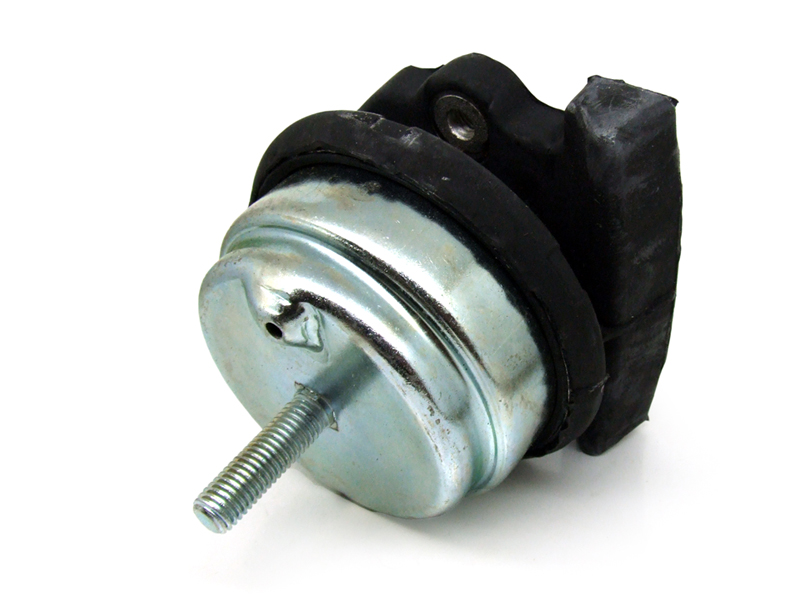
The OE Match Engine Mount is a high-quality replacement mounting component designed to securely support the engine while isolating vibration and movement from the vehicle chassis. Engine mounts play a critical role in maintaining correct engine positioning, reducing noise and vibration, and ensuring smooth power delivery throughout the drivetrain.
Sold Each.
x2 Required Per Car.
Fits:
- Porsche 924S 2.5L 1986-87
- Porsche 924S 2.5L 1988
- Porsche 944 2.5L 8V 1982-87
- Porsche 944 2.7L 8V 1988-89
- Porsche 944S 2.5L 16V 1987-88
- Porsche 944S2 3.0L 16V 1989-91
- Porsche 944 Turbo 2.5L 8V 1985-88
- Porsche 944 Turbo 2.5L 8V 1989-91
- Porsche 944 Turbo S 2.5L 8V 1988
- Porsche 968 3.0L 1992-94
- Porsche 968 Sport 3.0L 1994-95
- Porsche 968 CS 3.0L 1993-95
- Porsche 968 Turbo S 3.0L 1993-94
Diagram Ref No 1
Manufactured to OE specifications for fit, function and durability, this replacement engine mount combines robust metal construction with a resilient rubber damping element to provide the ideal balance of support and vibration isolation. It is an essential component for maintaining driving comfort, drivetrain alignment and overall vehicle reliability.
What This Product Does:
- Supports and secures the engine within the chassis.
- Absorbs and dampens engine vibration.
- Reduces the transmission of noise into the passenger compartment.
- Maintains correct engine alignment and positioning.
- Controls engine movement during acceleration, braking and cornering.
- Helps protect drivetrain and exhaust components from excessive stress.
Symptoms Of Wear Or Failure:
- Increased engine vibration felt through the cabin.
- Clunking, knocking or thumping noises during acceleration or gear changes.
- Excessive engine movement when accelerating or decelerating.
- Harsh drivetrain engagement.
- Visible cracking, splitting or deterioration of the rubber mount.
- Sagging or misaligned engine position.
- Increased noise levels from the engine bay.
- Premature wear of adjacent drivetrain or exhaust components.
Why Replacement Matters:
- Engine mounts are subjected to continuous engine vibration, drivetrain torque, road shock, heat and environmental exposure. Over time, the rubber damping material can harden, crack, compress or separate from the mount housing, reducing its ability to properly support and isolate the engine.
- A failed engine mount can allow excessive engine movement, leading to increased vibration, poor driving refinement and additional strain on transmission mounts, exhaust systems, hoses and drivetrain components. If left unchecked, this can contribute to accelerated wear and costly repairs elsewhere in the vehicle.
Related reference numbers
Related, superseded, cross reference or alternative numbers for comparison.
95137504204
The product you are viewing cross references to these numbers

- Porsche 924S 2.5L 1986-87
- Porsche 924S 2.5L 1988
- Porsche 944 2.5L 8V 1982-87
- Porsche 944 2.7L 8V 1988-89
- Porsche 944S 2.5L 16V 1987-88
- Porsche 944S2 3.0L 16V 1989-91
- Porsche 944 Turbo 2.5L 8V 1985-88
- Porsche 944 Turbo 2.5L 8V 1989-91
- Porsche 944 Turbo S 2.5L 8V 1988
- Porsche 968 3.0L 1992-94
- Porsche 968 Sport 3.0L 1994-95
- Porsche 968 CS 3.0L 1993-95
- Porsche 968 Turbo S 3.0L 1993-94
 Shop Securely
 12 Month Warranty
 Worldwide Delivery
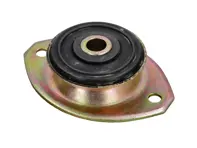
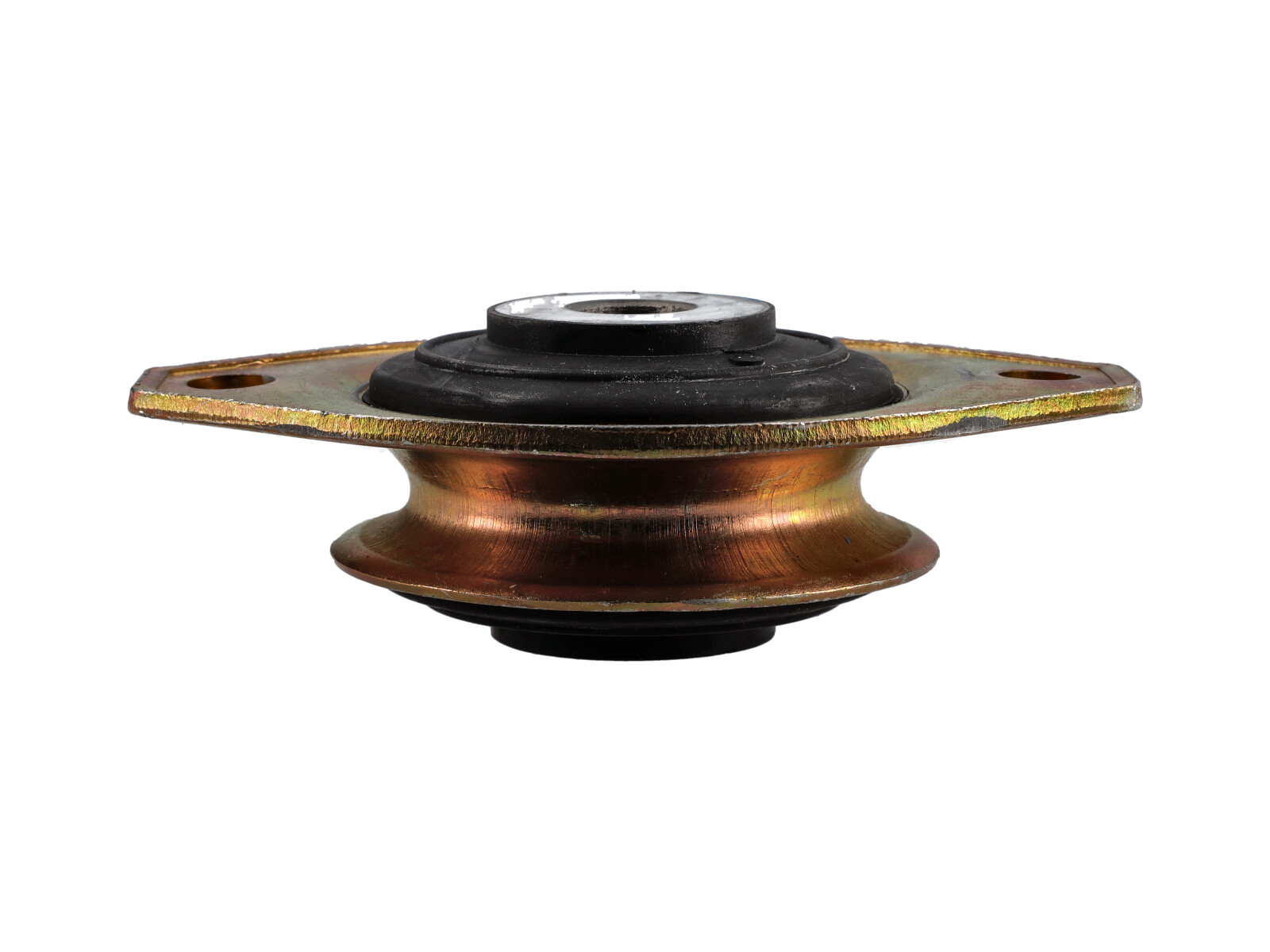
The OE Match Engine / Gearbox Mounts – Sport Version are high-performance replacement mounts designed to provide increased drivetrain stability compared to standard factory mounts. Manufactured to OE specifications with a firmer rubber compound, these sport mounts offer enhanced control of engine and gearbox movement while maintaining excellent durability and fitment.
Sold Each.
x2 Required Per Car.
Fits:
- Porsche 911 1974-1977 2.7L / 1976-77 3.0 Carrera
- Porsche 911 1978-1983 3.0L / SC
- Porsche 911 1984-1986 3.2L
- Porsche 911 1987-1989 3.2L G50
- Porsche 911 1975-1977 3.0L Turbo (930)
- Porsche 911 1978-1989 3.3L Turbo (930)
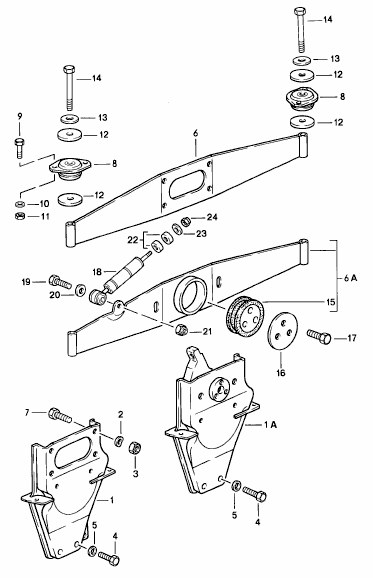
Diagram Ref No 8
Designed for performance-focused road and track applications, these mounts help minimise drivetrain flex during acceleration, braking and cornering. The increased stiffness improves vehicle response, gear shift precision and overall driving feel while retaining the reliability expected from OE-style components.
What This Product Does:
- Supports and secures the engine and gearbox assembly.
- Reduces excessive drivetrain movement under load.
- Provides greater drivetrain stability than standard mounts.
- Improves gear shift precision and drivetrain response.
- Helps maintain correct engine and transmission alignment.
- Reduces unwanted movement during acceleration, braking and cornering.
- Enhances vehicle handling characteristics and driver feedback.
Symptoms Of Wear Or Failure:
- Excessive engine or transmission movement.
- Clunking or knocking noises during gear changes.
- Increased drivetrain vibration.
- Harsh engagement when accelerating or decelerating.
- Misaligned or imprecise gear shifting.
- Sagging engine or gearbox position.
- Visible cracking, splitting or collapse of the rubber mount.
- Increased stress on exhaust, driveline and transmission components.
Why Replacement Matters:
- Engine and gearbox mounts are subjected to constant vibration, drivetrain torque, heat and road shock. Over time, the rubber can harden, crack, compress or separate from the mount structure, reducing its ability to support the drivetrain effectively.
- Worn mounts allow excessive engine and gearbox movement, which can negatively affect gear selection, handling characteristics and overall driving refinement. Excessive drivetrain movement may also place additional strain on exhaust systems, drive shafts, couplings and surrounding components.
Related reference numbers
Related, superseded, cross reference or alternative numbers for comparison.
91137504306
The product you are viewing cross references to these numbers
- Porsche 911 1974-1977 2.7L / 1976-77 3.0 Carrera
- Porsche 911 1978-1983 3.0L / SC
- Porsche 911 1984-1986 3.2L
- Porsche 911 1987-1989 3.2L G50
- Porsche 911 1975-1977 3.0L Turbo (930)
- Porsche 911 1978-1989 3.3L Turbo (930)
Shop Securely
12 Month Warranty
Worldwide Delivery
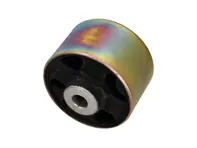
The OE Match Gearbox Silencer Block is a high-quality replacement mounting component designed to isolate and dampen vibration and noise generated by the gearbox and drivetrain. Installed between the transmission assembly and vehicle mounting points, the silencer block helps absorb drivetrain movement and reduce the transmission of vibration into the chassis and passenger compartment.
Fits:
- Porsche 964 (911) C2 1989-93 MANUAL (Gearbox type G50.03 / G50.04 / G50.05) TIPTRONIC (Gearbox type A50.02 / A50.03)
- Porsche 964 (911) TURBO 3.3L 1991-93 MANUAL (Gearbox type G50.52)
- Porsche 964 (911) TURBO 3.6L 1991-93 MANUAL (Gearbox type G50.52)
- Porsche 993 (911) C2 1994-97 MANUAL (Gearbox type G50.20 / G51.21) IPTRONIC (Gearbox type A50.04 / A50.05)
- Porsche 993 (911) TURBO 1994-96 (Gearbox type G50.20 / G51.21) IPTRONIC (Gearbox type A50.04 / A50.05)
Diagram Ref No 23
Manufactured to OE specifications using durable rubber and metal construction, this replacement silencer block restores the original levels of comfort, refinement and drivetrain support. It is an ideal replacement for worn, cracked or deteriorated original mounts commonly found on ageing Porsche vehicles.
What This Product Does:
- Isolates gearbox and drivetrain vibrations from the chassis.
- Reduces transmission noise entering the passenger compartment.
- Supports the gearbox while allowing controlled movement.
- Helps maintain correct drivetrain alignment.
- Minimises shock loads during acceleration and gear changes.
- Improves driving comfort and refinement.
Symptoms Of Wear Or Failure:
- Increased vibration felt through the cabin.
- Excessive drivetrain movement during acceleration or deceleration.
- Clunking or knocking noises when changing gear.
- Harsh engagement during gear shifts.
- Visible cracking, splitting or deterioration of the rubber mount.
- Sagging or misalignment of the gearbox assembly.
- Increased transmission noise within the vehicle.
- Premature wear of surrounding drivetrain components.
Why Replacement Matters:
- The gearbox silencer block is continuously exposed to drivetrain torque, engine vibration, road shock, heat and age-related deterioration. Over time, the rubber element can harden, crack or separate from its metal mounting surfaces, reducing its ability to absorb vibration and support the transmission correctly.
- A failed silencer block can allow excessive gearbox movement, leading to increased vibration, drivetrain noise and additional stress on transmission mounts, couplings and related components. If left unresolved, excessive movement may contribute to accelerated wear throughout the drivetrain system.
Related reference numbers
Related, superseded, cross reference or alternative numbers for comparison.
96437505581
The product you are viewing cross references to these numbers
- Porsche 964 (911) C2 1989-93
- Porsche 964 (911) TURBO 3.3L 1991-93
- Porsche 964 (911) TURBO 3.6L 1991-93
- Porsche 993 (911) C2 1994-97
- Porsche 993 (911) TURBO 1994-96
Shop Securely
12 Month Warranty
Worldwide Delivery

The OE Match Camshaft Idler Roller is a high-quality replacement timing belt guide roller designed to support and direct the camshaft timing belt within the engine timing system. As a critical component of the belt drive assembly, the idler roller helps maintain correct belt alignment, reduces vibration and ensures precise synchronisation between the crankshaft and camshaft.
Fits:
- Porsche 928S4 5.0L 1987-92
- Porsche 928GT 5.0L 1989-91
- Porsche 928GTS 5.4L 1992-95
Diagram Ref No 10
Manufactured to OE specifications for fit, performance and durability, this camshaft idler roller is engineered to withstand continuous operation, high rotational speeds and demanding engine conditions. It is an essential service item during timing belt replacement and preventative maintenance, helping to preserve the reliability and accuracy of the engine timing system.
What This Product Does:
- Guides and supports the camshaft timing belt.
- Maintains correct timing belt alignment and routing.
- Helps reduce belt vibration and movement.
- Promotes even belt wear and consistent operation.
- Supports accurate synchronisation between crankshaft and camshaft.
- Contributes to reliable engine timing and performance.
Symptoms Of Wear Or Failure:
- Chirping, squealing or grinding noises from the timing belt area.
- Excessive timing belt vibration.
- Rough or noisy bearing operation.
- Visible wear or damage to the roller surface.
- Timing belt misalignment.
- Uneven or accelerated timing belt wear.
- Bearing looseness or excessive play.
- Increased risk of timing belt failure.
Why Replacement Matters:
- The camshaft idler roller operates continuously while the engine is running and is subjected to constant rotational forces, heat and bearing loads. Over time, bearing wear, loss of lubrication and material fatigue can reduce the roller's effectiveness and reliability.
- A failing idler roller can negatively affect timing belt tracking and alignment, causing premature belt wear and placing additional stress on surrounding timing components. In severe cases, bearing seizure or roller failure may result in timing belt damage or loss of engine timing, potentially leading to costly engine repairs.
Related reference numbers
Related, superseded, cross reference or alternative numbers for comparison.
92810557104
The product you are viewing cross references to these numbers
- Porsche 928S4 5.0L 1987-92
- Porsche 928GT 5.0L 1989-91
- Porsche 928GTS 5.4L 1992-95
Shop Securely
12 Month Warranty
Worldwide Delivery
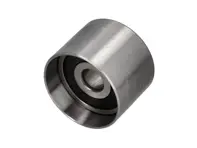
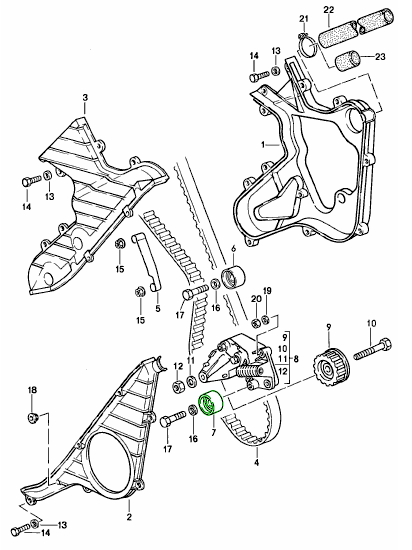
The OE Match Cam Idler Roller is a high-quality replacement component designed to guide and support the engine's camshaft timing belt. As an integral part of the timing belt system, the idler roller helps maintain correct belt alignment and tension, ensuring precise synchronisation between the crankshaft and camshaft for optimal engine performance.
Fits:
- Porsche 944S 2.5L 16V 1987-88
- Porsche 968 3.0L 1992-94
- Porsche 968 Sport 3.0L 1994-95
- Porsche 968 CS 3.0L 1993-95
- Porsche 968 Turbo S 3.0L 1993-94
Diagram Ref No 7
Manufactured to OE specifications for fit, function and durability, this cam idler roller is engineered to withstand high rotational speeds, engine heat and continuous operating loads. It is a recommended replacement during timing belt servicing, engine maintenance and timing system overhauls.
What This Product Does:
- Guides and supports the timing belt during engine operation.
- Maintains correct belt alignment throughout the timing system.
- Helps reduce belt vibration and unwanted movement.
- Promotes even timing belt wear.
- Supports accurate camshaft and crankshaft synchronisation.
- Contributes to reliable engine timing and smooth performance.
Symptoms Of Wear Or Failure:
- Squealing, chirping or grinding noises from the timing belt area.
- Excessive timing belt vibration.
- Rough or noisy bearing operation.
- Timing belt misalignment.
- Uneven or accelerated timing belt wear.
- Visible wear or damage to the roller surface.
- Bearing play or looseness.
- Increased risk of timing belt failure.
Why Replacement Matters:
- The cam idler roller operates continuously whenever the engine is running and is subjected to constant rotational forces, temperature fluctuations and bearing loads. Over time, the internal bearing can wear, lubrication can degrade and the roller surface may become damaged.
- A failing idler roller can compromise timing belt alignment, leading to increased belt wear and unnecessary stress on the timing system. In severe cases, bearing seizure or roller failure may result in timing belt damage or loss of engine timing, potentially causing expensive engine repairs.
Related reference numbers
Related, superseded, cross reference or alternative numbers for comparison.
94410524102
The product you are viewing cross references to these numbers
- Porsche 944S 2.5L 16V 1987-88
- Porsche 968 3.0L 1992-94
- Porsche 968 Sport 3.0L 1994-95
- Porsche 968 CS 3.0L 1993-95
- Porsche 968 Turbo S 3.0L 1993-94
Shop Securely
12 Month Warranty
Worldwide Delivery

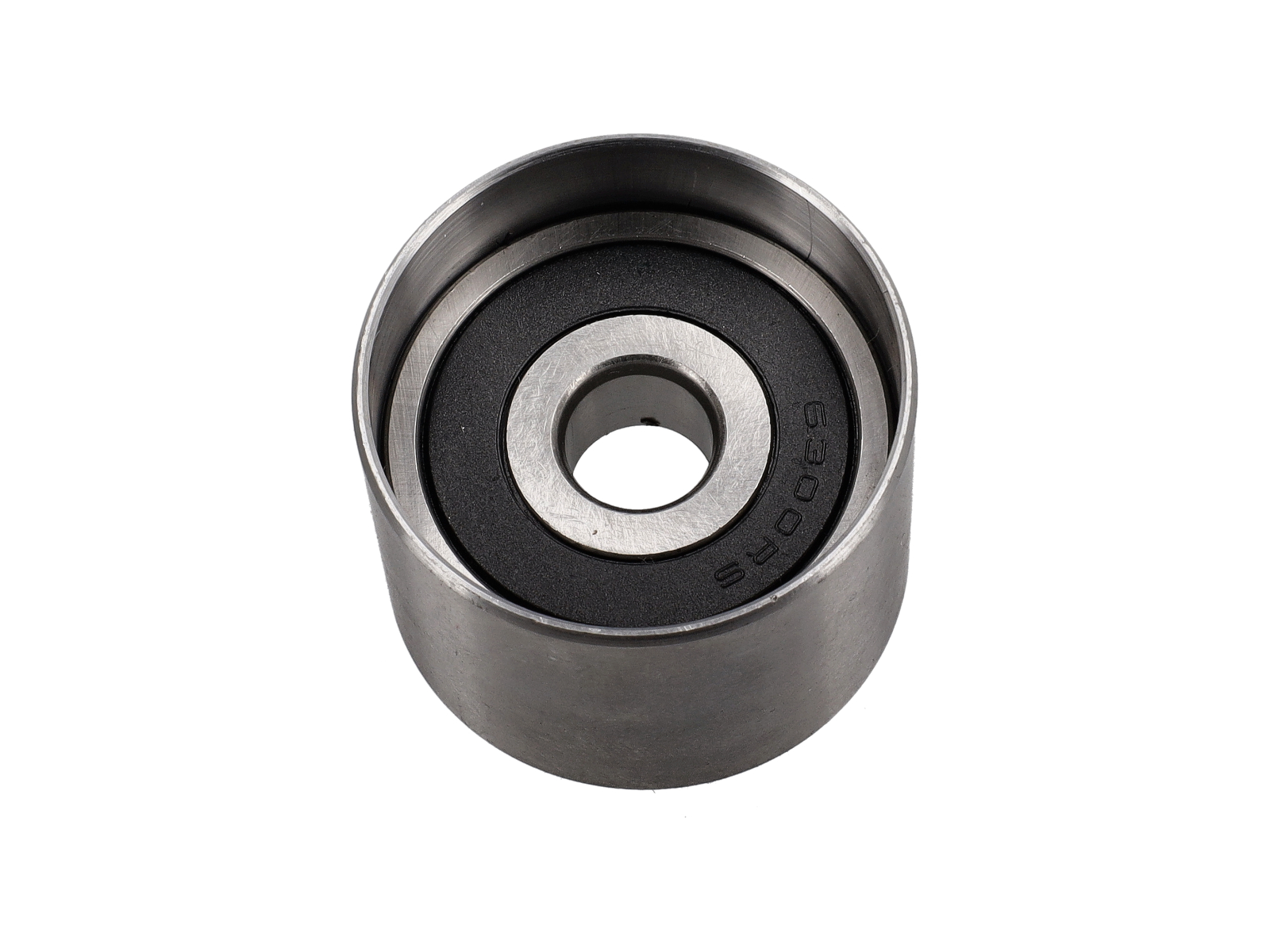
This is a high-quality cam-/timing-belt idler/guide roller designed to replicates the original manufacturer specifications for diameter, width, bearing quality. Cam idler roller maintaining correct belt tension and alignment so that the camshafts, crankshaft (and in balance-shaft applications) remain perfectly synchronised. If the idler becomes worn or seizes, the belt can deviate, skip teeth or fail, potentially leading to catastrophic engine damage.
Fits:
Porsche 924S 1986 - 1988
Porsche 944 1983 - 1989*
Porsche 944 S, 944 S2, 944 Turbo
Porsche 968 1992 - 1995
* see Notes 2 & 3
Note 1: Also fits early 87 924S up to engine # 43H01919 (Manual Trans) & 43H60384 (Auto Trans)
Note 2: Also fits early 87 924S from engine # 43H01920 (Manual Trans) & 43H60385 (Auto Trans)
Note 3: Early cars (83-86) that have been updated to the later style water pump with belt guard rail will use this roller.
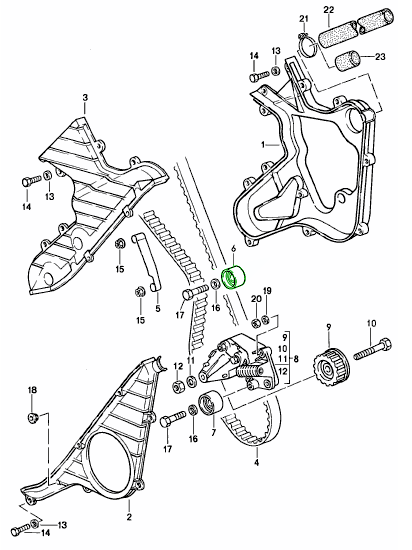
Diagram ref no 6
• Position on Vehicle: his part mounts in the timing belt drive system (camshaft-belt/guide roller area) on the front of the engine block, often adjacent to the belt guard/rail for the water pump/temporal belt path.
• Applications: Timing belt drive systems in the above-listed Porsche models (924S, 944, 968). Suitable replacement when restoring or maintaining correct cam/ crank timing and belt drive reliability.
The timing belt idler roller plays a crucial role in maintaining precise belt alignment and smooth engine operation. Over time, the bearing can wear out or seize, risking belt failure and serious engine damage. Replacing the roller during scheduled maintenance ensures long-term reliability, quiet operation, and protection of vital engine components.
When and why to replace:
• Signs of wear, noise, or rough bearing movement.
• During timing belt or water-pump service for easy access and complete system refresh.
• Preventative maintenance on high-mileage or older vehicles with original rollers.
• To prevent costly repairs caused by belt misalignment or breakage.
• To restore smooth, quiet belt operation and consistent timing performance.
Related reference numbers
Related, superseded, cross reference or alternative numbers for comparison.
94410524104
The product you are viewing cross references to these numbers
- Porsche 924S 2.5L 1986-87
- Porsche 924S 2.5L 1988
- Porsche 944 2.5L 8V 1982-87
- Porsche 944 2.7L 8V 1988-89
- Porsche 944S 2.5L 16V 1987-88
- Porsche 944S2 3.0L 16V 1989-91
- Porsche 944 Turbo 2.5L 8V 1985-88
- Porsche 944 Turbo 2.5L 8V 1989-91
- Porsche 944 Turbo S 2.5L 8V 1988
- Porsche 968 3.0L 1992-94
- Porsche 968 Sport 3.0L 1994-95
- Porsche 968 CS 3.0L 1993-95
- Porsche 968 Turbo S 3.0L 1993-94
Shop Securely
12 Month Warranty
Worldwide Delivery
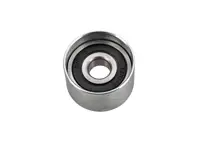
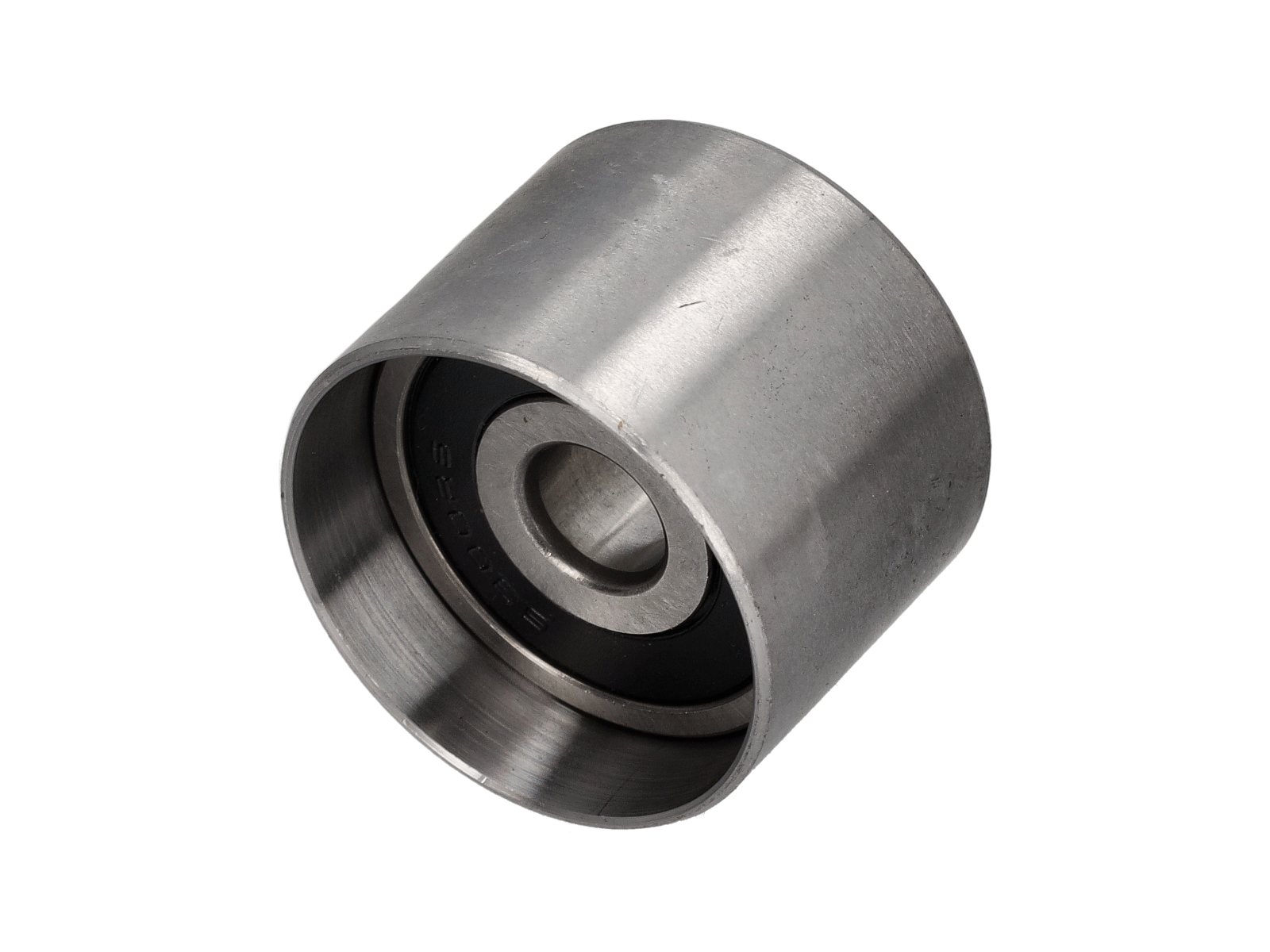
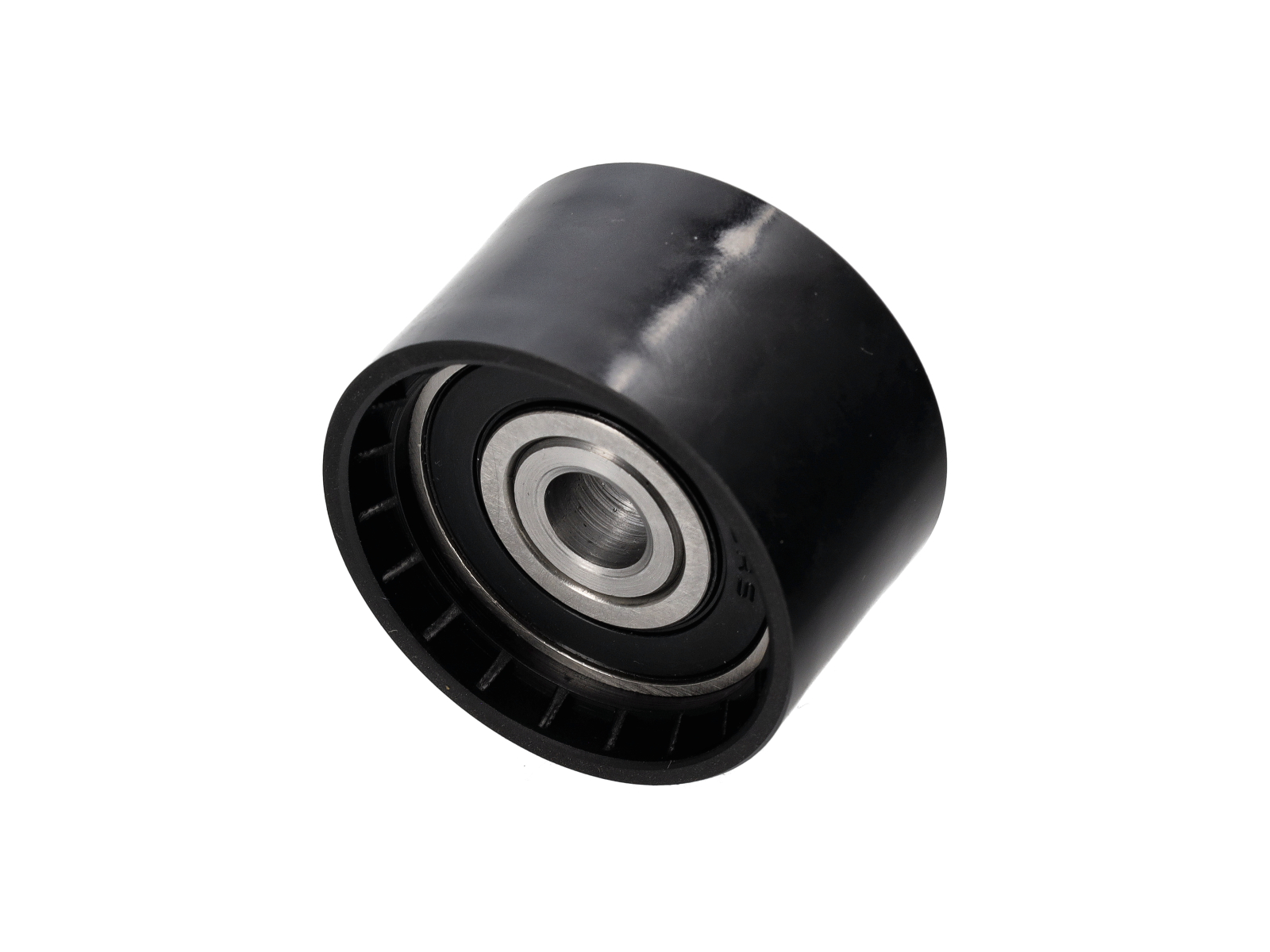
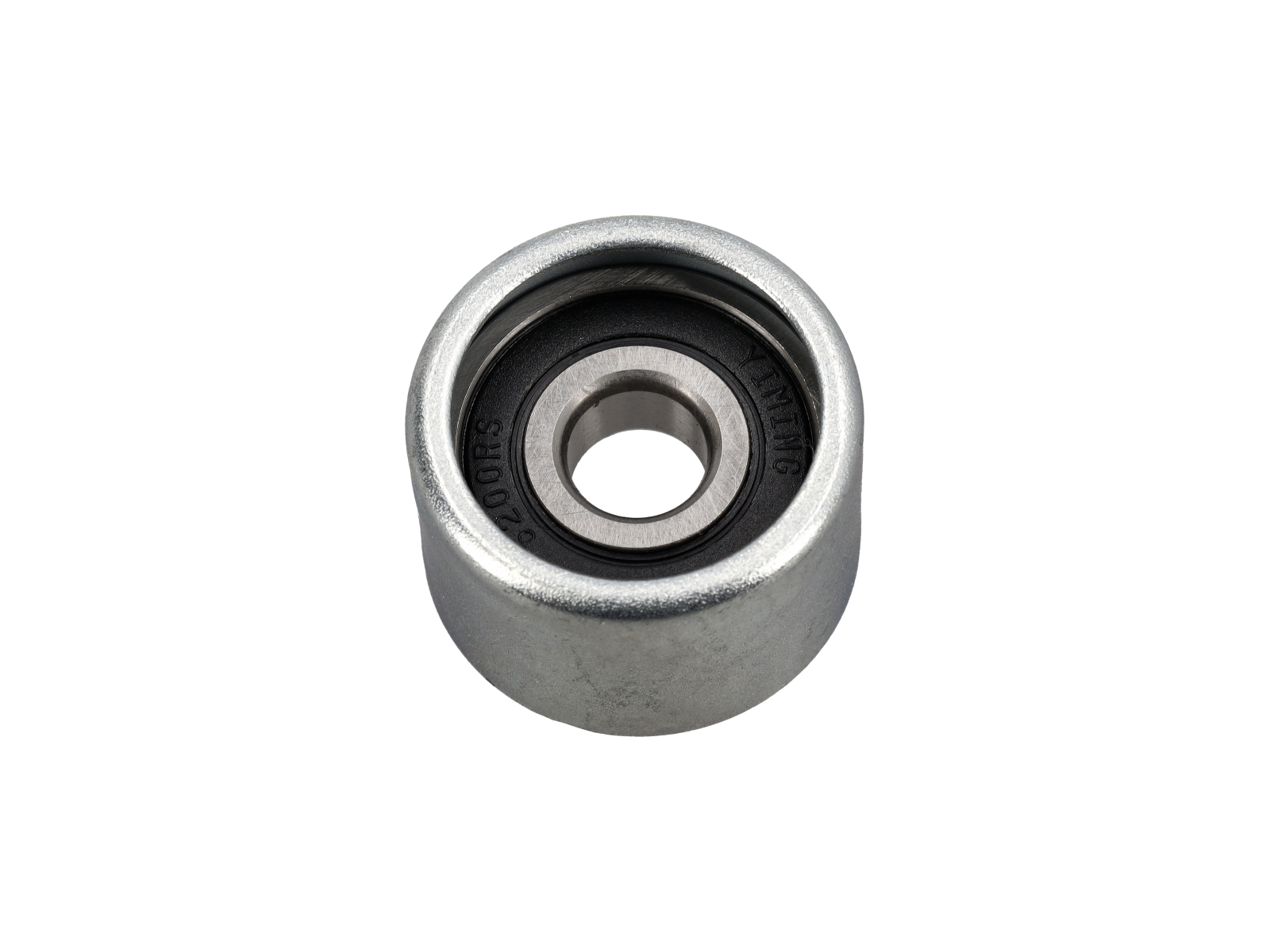
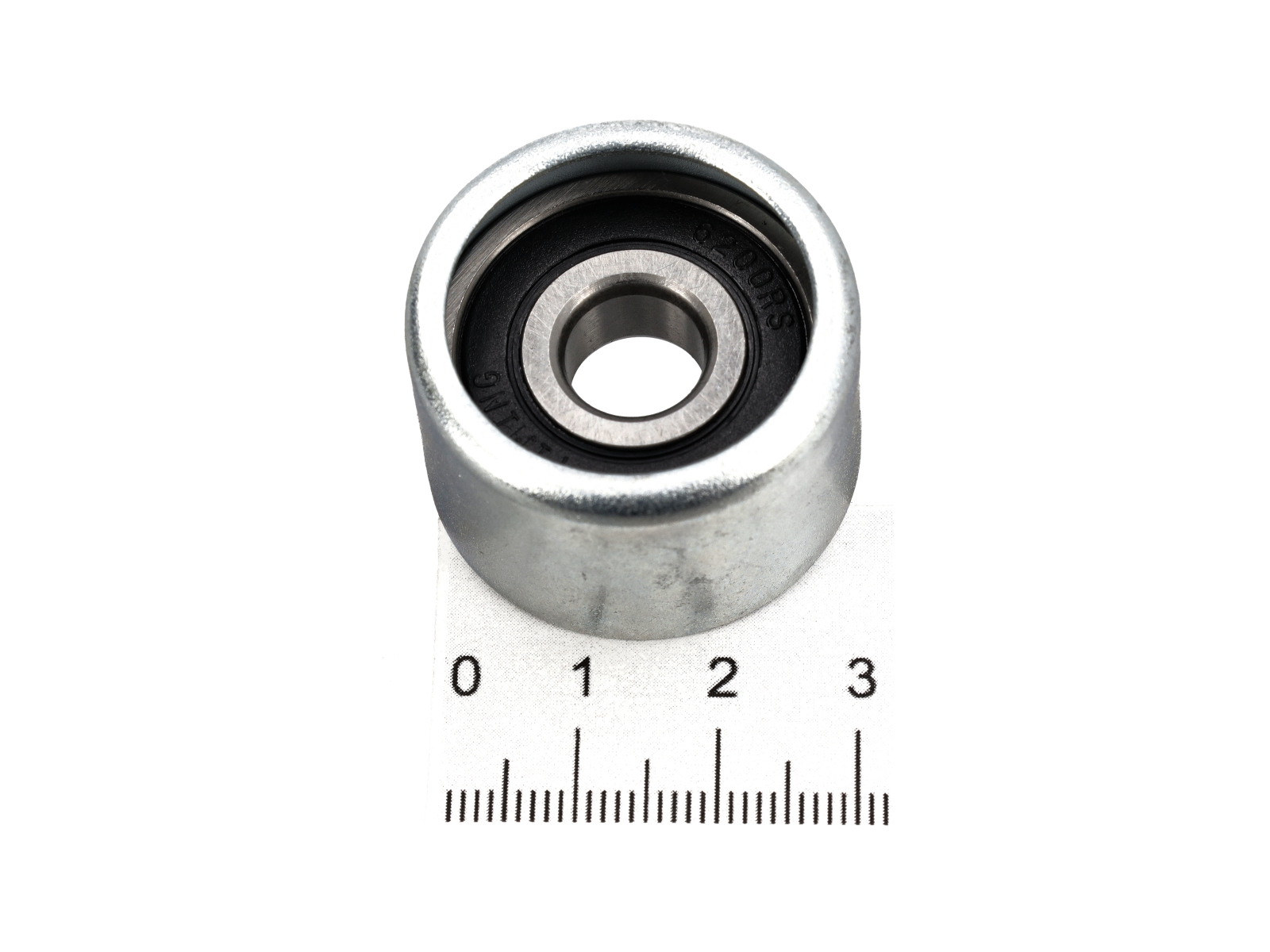
The OE Match Cam Idler Roller is a high-quality replacement timing belt guide roller designed to support and guide the camshaft timing belt within the engine timing system. Featuring an outer diameter of 32mm and a width of 21mm, this precision-engineered idler roller helps maintain correct belt routing, alignment and stability throughout engine operation.
Fits:
- Porsche 924S 2.5L 1986-87
- Porsche 944 2.5L 8V 1982-87
- Porsche 944 Turbo 2.5L 8V 1985-88
Diagram Ref No 7
Manufactured to OE specifications for fit, function and durability, the roller is designed to withstand constant rotational loads, engine heat and high-speed operation. It is an essential service component during timing belt replacement and engine maintenance, helping to ensure reliable timing system performance and long-term engine protection.
What This Product Does:
- Guides and supports the camshaft timing belt.
- Maintains correct timing belt alignment and routing.
- Reduces belt vibration and unwanted movement.
- Promotes even belt wear across the timing system.
- Helps ensure accurate synchronisation between the crankshaft and camshaft.
- Supports smooth and reliable engine operation.
Symptoms Of Wear Or Failure:
- Squealing, chirping or grinding noises from the timing belt area.
- Excessive timing belt vibration.Rough or noisy bearing operation.
- Visible wear on the roller surface.Timing belt misalignment.
- Uneven or accelerated timing belt wear.
- Bearing play or looseness within the roller.
- Timing belt failure risk in severe cases.
Why Replacement Matters:
- The cam idler roller operates continuously whenever the engine is running and is subjected to constant rotational speeds, heat and bearing loads. Over time, the internal bearing can wear, lubrication can deteriorate and the roller surface may become damaged.
- A failing idler roller can cause timing belt misalignment, increased belt wear and excessive stress on other timing system components. In severe cases, bearing seizure or roller failure can lead to timing belt damage, potentially resulting in significant engine damage and expensive repairs.
Related reference numbers
Related, superseded, cross reference or alternative numbers for comparison.
94410527302
The product you are viewing cross references to these numbers
- Porsche 924S 2.5L 1986-87
- Porsche 944 2.5L 8V 1982-87
- Porsche 944 Turbo 2.5L 8V 1985-88
Shop Securely
12 Month Warranty
Worldwide Delivery
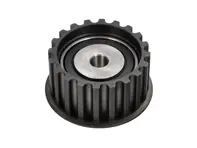
The OE Match Cam Belt Tensioner is a high-quality replacement component designed to maintain the correct tension on the engine's camshaft timing belt. As a critical part of the timing system, the tensioner ensures the timing belt remains properly aligned and tensioned, allowing precise synchronisation between the crankshaft and camshaft.
Fits:
- Porsche 944S 2.5L 16V 1987-88
- Porsche 968 3.0L 1992-94
- Porsche 968 Sport 3.0L 1994-95
- Porsche 968 CS 3.0L 1993-95
- Porsche 968 Turbo S 3.0L 1993-94
Diagram Ref No 9
Manufactured to OE specifications for fit, function and durability, this cam belt tensioner is engineered to withstand continuous operation, high engine speeds and demanding operating conditions. It is an essential replacement part during timing belt servicing, engine maintenance or timing system overhauls.
What This Product Does:
- Maintains correct tension on the camshaft timing belt.
- Prevents timing belt slack and misalignment.
- Ensures accurate synchronisation between the crankshaft and camshaft.
- Reduces vibration and movement within the timing belt system.
- Helps maintain precise valve timing and engine performance.
- Supports the longevity of the timing belt and related components.
Symptoms Of Wear Or Failure:
- Maintains correct tension on the camshaft timing belt.
- Prevents timing belt slack and misalignment.
- Ensures accurate synchronisation between the crankshaft and camshaft.
- Reduces vibration and movement within the timing belt system.
- Helps maintain precise valve timing and engine performance.
- Supports the longevity of the timing belt and related components.
Why Replacement Matters:
- The cam belt tensioner operates continuously whenever the engine is running and is subjected to constant load, heat and vibration. Over time, bearings, springs and pulley surfaces can wear, reducing the tensioner's ability to maintain proper belt tension.
- A failing tensioner can allow the timing belt to become loose, misaligned or prematurely worn. In severe cases, timing belt failure can occur, potentially causing significant engine damage and costly repairs. Because the timing system relies on precise belt tension to maintain accurate valve timing, replacing a worn tensioner is an important preventative maintenance measure.
Related reference numbers
Related, superseded, cross reference or alternative numbers for comparison.
94410563110
The product you are viewing cross references to these numbers
- Porsche 944S 2.5L 16V 1987-88
- Porsche 968 3.0L 1992-94
- Porsche 968 Sport 3.0L 1994-95
- Porsche 968 CS 3.0L 1993-95
- Porsche 968 Turbo S 3.0L 1993-94
Shop Securely
12 Month Warranty
Worldwide Delivery

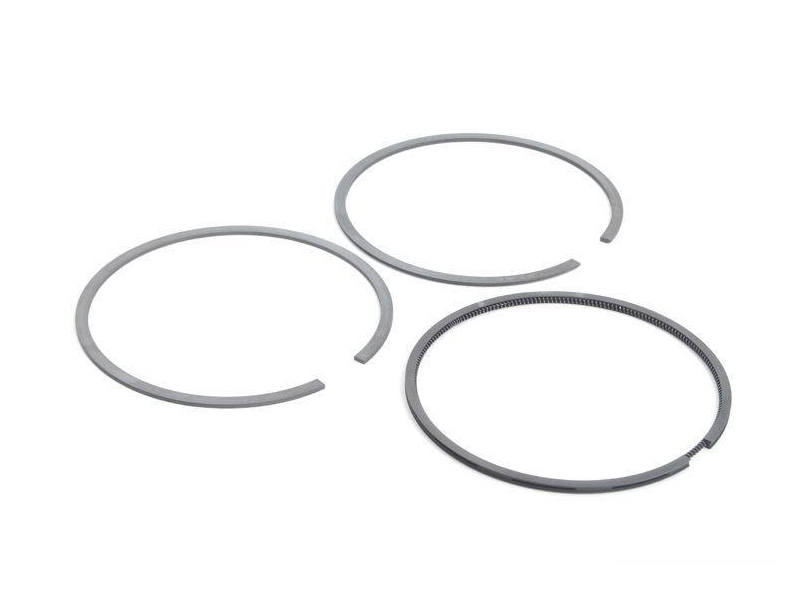
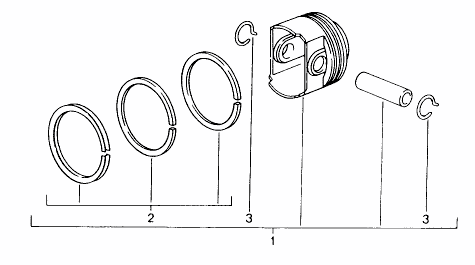
The OE Match Piston Ring Set is a high-quality replacement ring set designed for pistons with a 93mm bore diameter. Featuring ring dimensions of 1.20mm, 1.50mm and 2.00mm, this precision-engineered set is manufactured to OE specifications to ensure proper sealing between the piston and cylinder wall.
x6 Sets Required Per Car.
Fits:
- Porsche Boxster S 986 3.2L 1999-02
- Porsche Boxster S 986 3.2L 2003-04
- Porsche Boxster 987 S 3.2/3.4L 2005-08/08
- Porsche 955 Cayenne S 4.5L V8 2003-06
- Porsche 955 Cayenne Turbo 4.5L 2003-06
Diagram Ref No 2
Piston rings are critical components within the engine, responsible for maintaining compression, controlling oil consumption and transferring heat from the piston to the cylinder wall. This OE Match ring set provides the correct fit, sealing performance and durability required for engine rebuilds, overhauls and performance restoration projects.
What This Product Does:
- Creates a gas-tight seal between the piston and cylinder wall.
- Maintains engine compression for efficient combustion.
- Controls engine oil distribution on cylinder walls.
- Prevents excessive oil from entering the combustion chamber.
- Transfers heat from the piston to the cylinder bore.
- Helps optimise engine performance, efficiency and reliability.
Symptoms Of Wear Or Failure:
- Excessive engine oil consumption.
- Blue smoke from the exhaust system.
- Reduced engine compression.
- Loss of engine power and performance.
- Poor acceleration and throttle response.
- Increased crankcase pressure.
- Excessive engine blow-by.
- Fouled spark plugs caused by oil contamination.
- Difficult starting and reduced fuel efficiency.
Why Replacement Matters:
- Piston rings operate under extreme temperatures, pressures and friction throughout every engine cycle. Over time, normal wear can reduce their ability to seal the combustion chamber and control oil movement effectively. Excessive wear may result in compression loss, increased oil consumption and reduced engine performance.
- If worn piston rings are not replaced, combustion gases can escape past the piston, while engine oil can enter the combustion chamber, leading to increased emissions, carbon build-up and potential engine damage. During engine rebuilds or major repairs, replacing piston rings is essential for restoring proper compression, oil control and overall engine efficiency.
Related reference numbers
Related, superseded, cross reference or alternative numbers for comparison.
99610303351
The product you are viewing cross references to these numbers
- Porsche Boxster S 986 3.2L 1999-02
- Porsche Boxster S 986 3.2L 2003-04
- Porsche Boxster 987 S 3.2/3.4L 2005-08/08
- Porsche 955 Cayenne S 4.5L V8 2003-06
- Porsche 955 Cayenne Turbo 4.5L 2003-06
Shop Securely
12 Month Warranty
Worldwide Delivery
Fits:
Porsche 911 1973-89
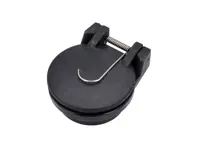
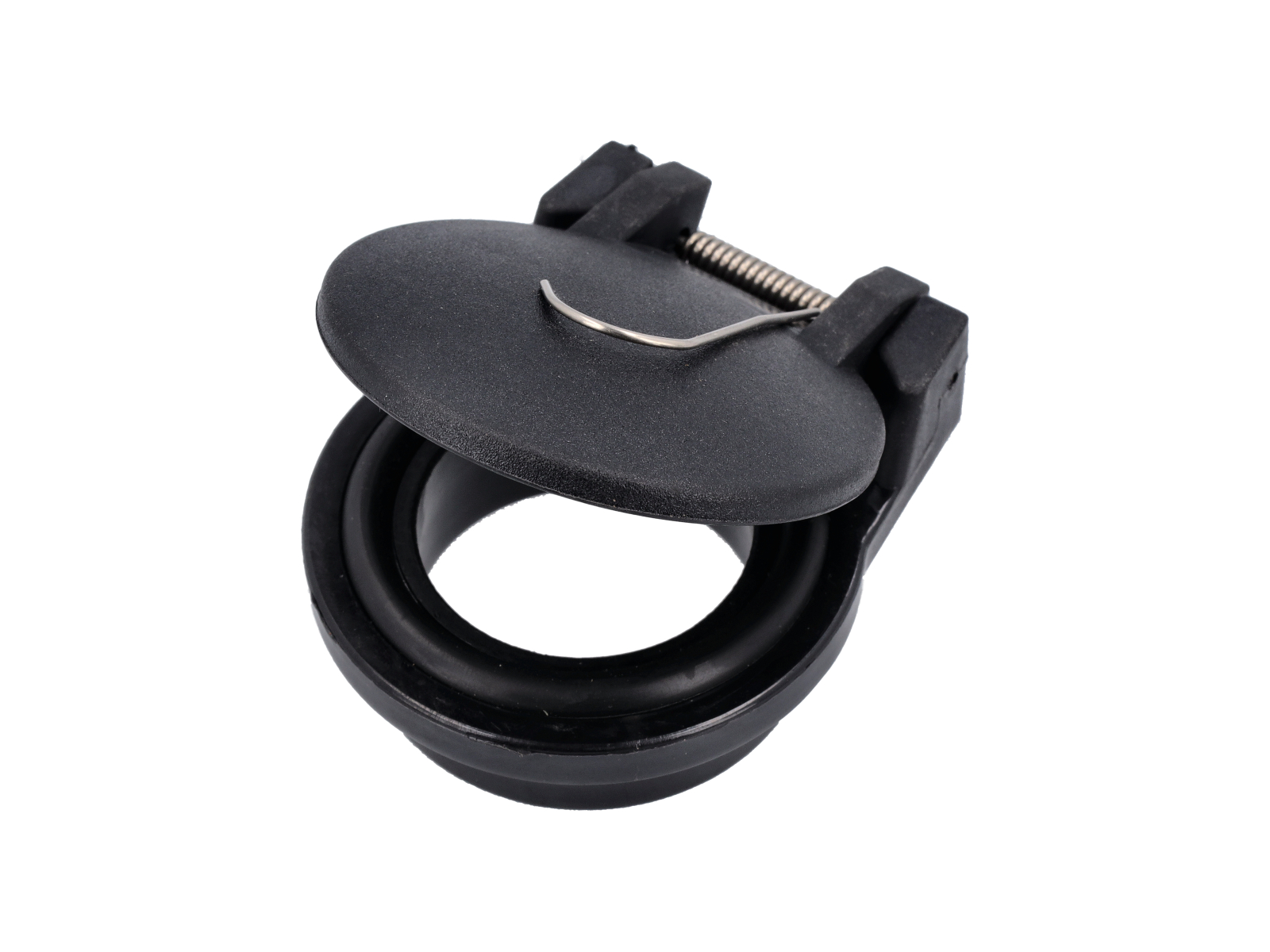
Prevents costly airbox explosions, installed with the engine and air box in place. 911 engines since 1973 have had the bad habit of backfiring and blowing a hole an the air box. 911 POP VALVE is installed inside the air box and when a backfire occurs the valve will instantly open and release the backfire pressure. The POP VALVE then automatically closes and the angine continues to run. The POP VALVE has no effect on the performance or fuel mileage.
CIS Pop Off Valve Installation Click Here
For Fitting Instructions CLICK HERE
Please note the glue is not included with the air valve.
Related reference numbers
Related, superseded, cross reference or alternative numbers for comparison.
911901522
The product you are viewing cross references to these numbers
- Porsche 911 1968-1973 2.2L / 2.4L / 2.7L RS LWB (F)
- Porsche 911 1974-1977 2.7L / 1976-77 3.0 Carrera
- Porsche 911 1978-1983 3.0L / SC
- Porsche 911 1984-1986 3.2L
- Porsche 911 1987-1989 3.2L G50
- Porsche 911 1975-1977 3.0L Turbo (930)
- Porsche 911 1978-1989 3.3L Turbo (930)
Shop Securely
12 Month Warranty
Worldwide Delivery

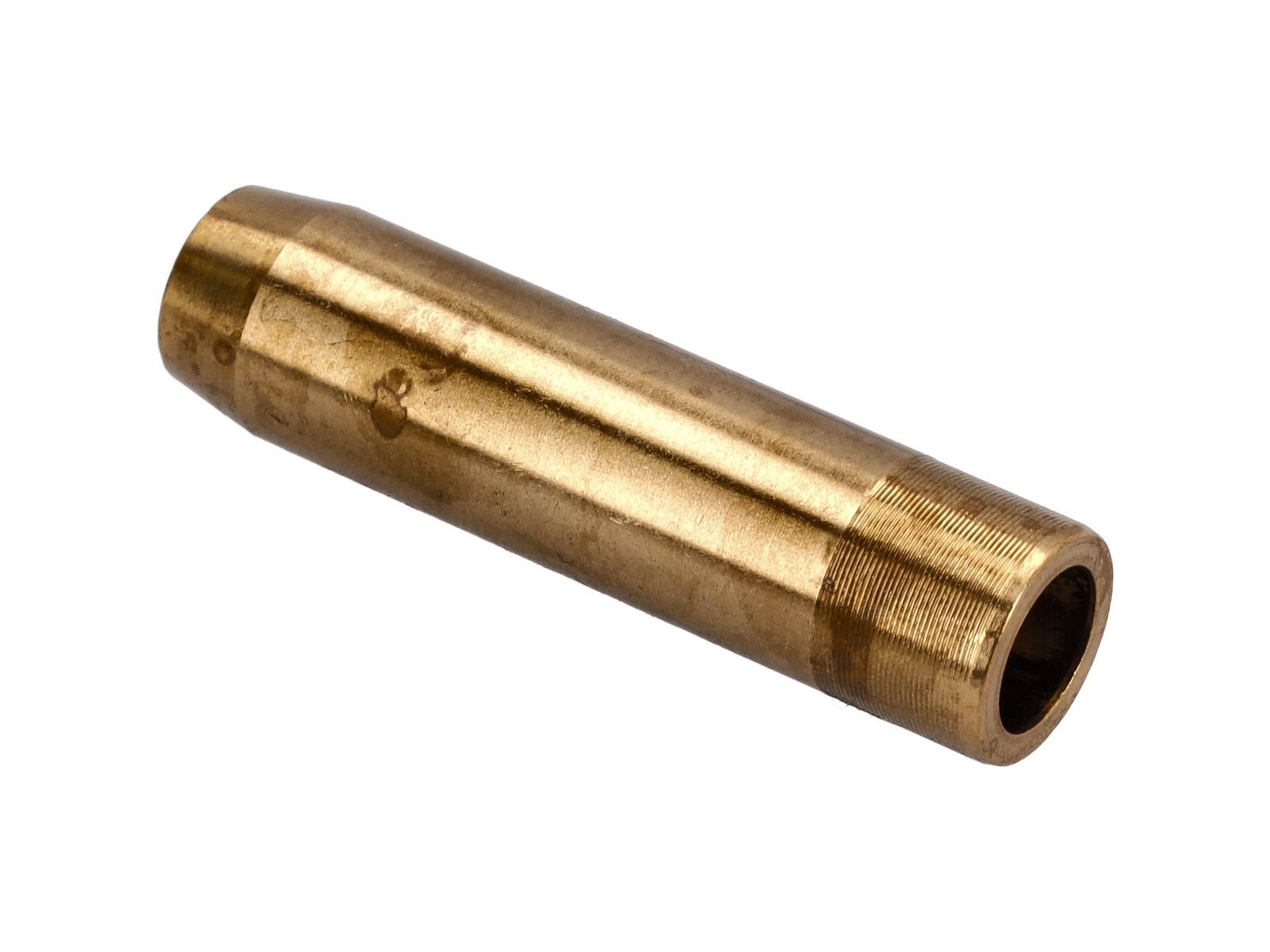
This is the standard valve guide used in early air-cooled Porsche 911/930 cylinder heads. It’s a plain (non-hydraulic) guide that locates the valve stem in the head; when worn it causes oil burning, loss of compression and poor valve seating — so they’re commonly replaced whenever heads are rebuilt.
What the part is (technical data / dimensions)
Application: Porsche 911 / 930 from about 1965–1989 (varies slightly by model and year; early cars both intake & exhaust, later years sometimes exhaust only). Standard size (typical OE): ID ≈ 9.00 mm, OD ≈ 13.06 mm, length ≈ 51.2 mm.
- Fits:
- Porsche 911 1965-1968 2.0L / 912 SWB (F)
- Porsche 911 1968-1973 2.2L / 2.4L / 2.7L RS LWB (F)
- Porsche 911 1974-1977 2.7L / 1976-77 3.0 Carrera
- Porsche 911 1978-1983 3.0L / SC
- Porsche 911 1984-1986 3.2L
- Porsche 911 1987-1989 3.2L G50
- Porsche 911 1975-1977 3.0L Turbo (930)
- Porsche 911 1978-1989 3.3L Turbo (930)
Why these guides should be replaced
- Valve guides are a wearing item. Replace them when any of the following occur or when you rebuild the engine head.
- Excessive valve stem play — worn guide ID internal diameter lets the valve rock and misalign with the seat , poor sealing, reduced compression and power.
- Oil consumption / smoking — worn guides allow oil to wick down the stem into the combustion chamber, causing blue/grey smoke and fouled plugs.
- Hard starting, rough idle, misfire — poor sealing / valve timing irregularities from misaligned valves.
- Valve wobble that leads to premature valve stem wear or valve seat damage — once stems or seats are damaged you need deeper surgery.
- If a guide is cracked, broken, or has excessive ovality — must be replaced.
- Whenever you remove and refinish seats / replace springs / do a full head rebuild — replacing guides at that time is cheap insurance and ensures correct alignment.
Inner diameter 9,00 mm
Outer diameter 13,06 mm
Total Length 51,20 mm
Click 'Zoom in' for large parts diagram.
Diagram Ref No 2 and 2A.
Related reference numbers
Related, superseded, cross reference or alternative numbers for comparison.
93010432100
The product you are viewing cross references to these numbers
- Porsche 911 1965-1968 2.0L / 912 SWB (F)
- Porsche 911 1968-1973 2.2L / 2.4L / 2.7L RS LWB (F)
- Porsche 911 1974-1977 2.7L / 1976-77 3.0 Carrera
- Porsche 911 1978-1983 3.0L / SC
- Porsche 911 1984-1986 3.2L
- Porsche 911 1987-1989 3.2L G50
- Porsche 911 1975-1977 3.0L Turbo (930)
- Porsche 911 1978-1989 3.3L Turbo (930)
Shop Securely
12 Month Warranty
Worldwide Delivery
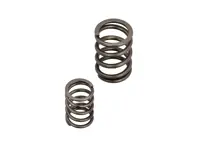
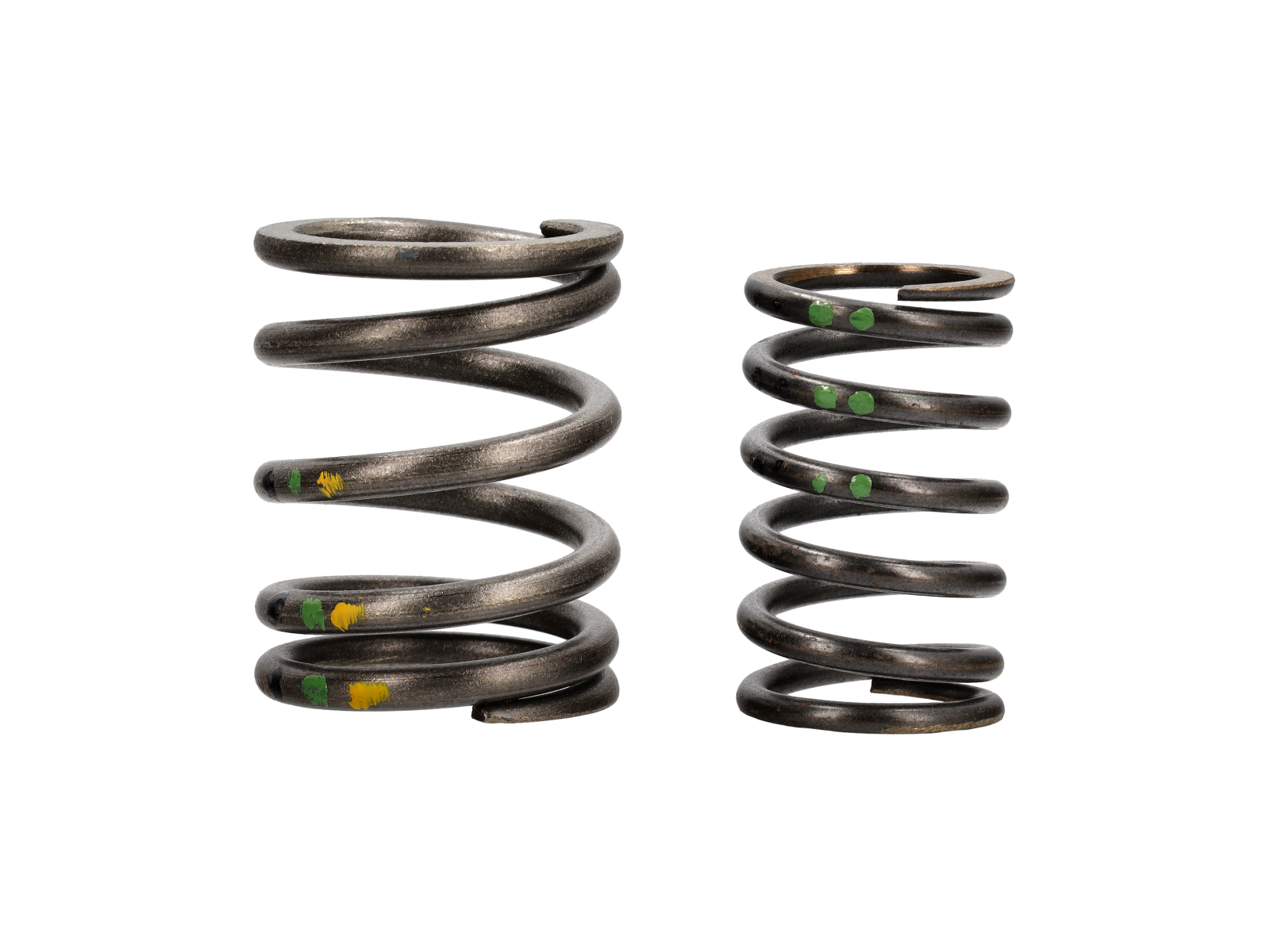
Valve Spring
Sold each
The Porsche Valve Spring is a critical component
of the valve train system fitted to numerous Porsche 911 and Porsche 964 models
from 1965 to 1994. Designed to maintain precise valve operation throughout the
engine's RPM range, the valve spring ensures that intake and exhaust valves
close correctly after being opened by the camshaft.
Fits:
- Porsche 911 1965-1968 2.0L / 912 SWB (F)
- Porsche 911 1968-1973 2.2L / 2.4L / 2.7L RS LWB (F)
- Porsche 911 1974-1977 2.7L / 1976-77 3.0 Carrera
- Porsche 911 1978-1983 3.0L / SC
- Porsche 911 1984-1986 3.2L
- Porsche 911 1987-1989 3.2L G50
- Porsche 911 1975-1977 3.0L Turbo (930)
- Porsche 911 1978-1989 3.3L Turbo (930)
- Porsche 964 (911) C2 1989-93
- Porsche 964 (911) C4 1989-93
- Porsche 964 (911) RS 3.6L 1991-93
- Porsche 964 (911) RS 3.8L 1991-93
- Porsche 964 (911) TURBO 3.3L 1991-93
- Porsche 964 (911) TURBO 3.6L 1991-93
Diagram Ref No 13
In Porsche's legendary air-cooled flat-six engines, accurate valve control is essential for maintaining combustion efficiency, engine performance, reliability, and long-term durability. The valve spring works continuously under extreme mechanical stress, cycling thousands of times per minute to keep the valve train operating correctly.
Whether you're rebuilding a classic Porsche engine, restoring a 911, or carrying out a cylinder head overhaul, replacing worn valve springs helps maintain factory performance and reduces the risk of costly engine damage.
What Does the Valve Spring Do?
The valve spring is responsible for returning the intake and exhaust valves to their closed position after each opening cycle generated by the camshaft.
Its key functions include:
- Maintaining correct valve timing operation
- Ensuring valves close fully and consistently
- Keeping the valve train under proper tension
- Preventing valve float at higher engine speeds
- Supporting engine compression and combustion efficiency
- Protecting the valve train from instability and excessive wear
Without adequate spring tension, valves may not close correctly, leading to poor performance and potential engine damage.
Why Does the Valve Spring Fail?
Valve springs are constantly subjected to compression, heat, vibration, and high engine speeds. Over time, these factors can lead to material fatigue and a gradual loss of spring tension.
Common causes of valve spring failure include:
- Metal fatigue from repeated cycling
- High mileage wear
- Prolonged exposure to engine heat
- Over-revving the engine
- Corrosion or contamination
- Performance modifications increasing valve train loads
- Age-related weakening of spring material
- Improper engine assembly or valve train geometry
As spring pressure decreases, valve control becomes less precise, particularly at higher RPM.
Common Symptoms of Worn Valve Springs
A weakened or damaged valve spring may cause:
- Loss of engine performance
- Valve float at higher RPM
- Rough idle
- Engine misfires
- Increased valve train noise
- Reduced power output Inconsistent compression readings
- Premature wear of valves, guides, and camshaft components
In severe cases, a broken valve spring can result in valve-to-piston contact and major engine damage.
When Should You Replace Valve Springs?
Valve springs should be inspected whenever the cylinder heads are removed and replaced if any signs of fatigue or wear are detected.
Replacement is strongly recommended:
- During complete engine rebuilds
- During cylinder head refurbishment
- On high-mileage engines
- When installing performance camshafts
- If valve float is present
- When spring tension falls below specification
- During preventative maintenance on restoration projects
- Whenever a spring shows signs of corrosion or damage
Many experienced Porsche engine builders replace all valve springs during rebuilds to ensure consistent valve train performance and long-term reliability.
Related reference numbers
Related, superseded, cross reference or alternative numbers for comparison.
90110590151
The product you are viewing cross references to these numbers
- Porsche 911 1965-1968 2.0L / 912 SWB (F)
- Porsche 911 1968-1973 2.2L / 2.4L / 2.7L RS LWB (F)
- Porsche 911 1974-1977 2.7L / 1976-77 3.0 Carrera
- Porsche 911 1978-1983 3.0L / SC
- Porsche 911 1984-1986 3.2L
- Porsche 911 1987-1989 3.2L G50
- Porsche 911 1975-1977 3.0L Turbo (930)
- Porsche 911 1978-1989 3.3L Turbo (930)
- Porsche 964 (911) C2 1989-93
- Porsche 964 (911) C4 1989-93
- Porsche 964 (911) RS 3.6L 1991-93
- Porsche 964 (911) RS 3.8L 1991-93
- Porsche 964 (911) TURBO 3.3L 1991-93
- Porsche 964 (911) TURBO 3.6L 1991-93
Shop Securely
12 Month Warranty
Worldwide Delivery

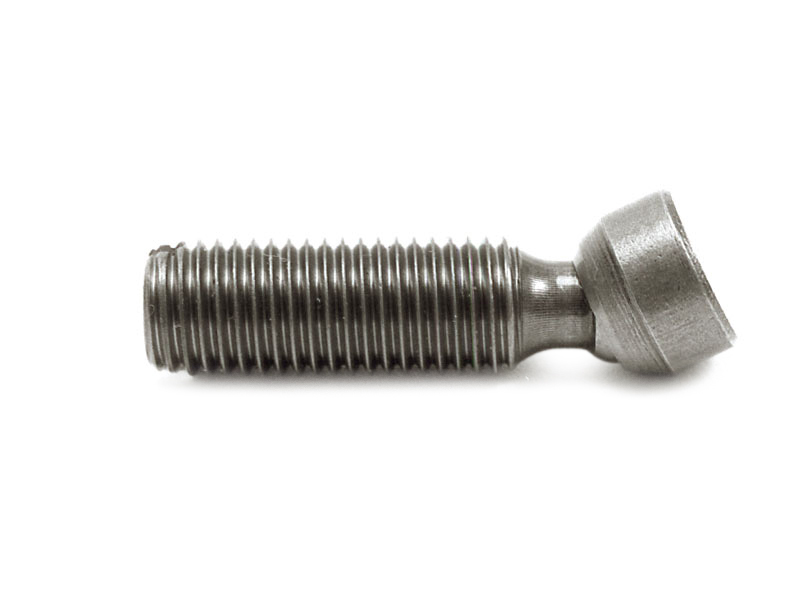
Rocker Arm Adjustment Screw
Sold each
The Porsche Rocker Arm Adjustment Screw is a
vital valve train component used on Porsche 911 and Porsche 964 models from
1965 to 1994. This precision-engineered adjuster screw allows accurate setting
of valve clearances, ensuring the correct relationship between the rocker arm
and valve stem for smooth engine operation and optimal performance.
Fits:
- Porsche 911 1965-1968 2.0L / 912 SWB (F)
- Porsche 911 1968-1973 2.2L / 2.4L / 2.7L RS LWB (F)
- Porsche 911 1974-1977 2.7L / 1976-77 3.0 Carrera
- Porsche 911 1978-1983 3.0L / SC
- Porsche 911 1984-1986 3.2L
- Porsche 911 1987-1989 3.2L G50
- Porsche 911 1975-1977 3.0L Turbo (930)
- Porsche 911 1978-1989 3.3L Turbo (930)
- Porsche 964 (911) C2 1989-93
- Porsche 964 (911) C4 1989-93
- Porsche 964 (911) RS 3.6L 1991-93
- Porsche 964 (911) RS 3.8L 1991-93
- Porsche 964 (911) TURBO 3.3L 1991-93
- Porsche 964 (911) TURBO 3.6L 1991-93
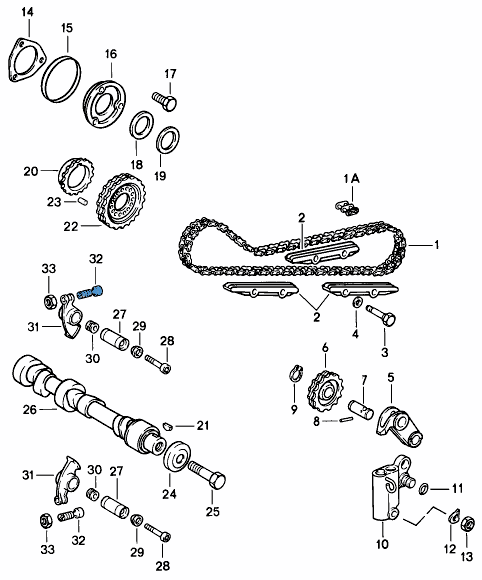
Diagram ref no 32
In Porsche's iconic air-cooled flat-six engines, valve clearance adjustment is a critical maintenance procedure. The rocker arm adjustment screw enables technicians to set valve lash precisely, helping maintain correct valve timing, efficient combustion, reduced valve train wear, and long-term engine reliability.
Whether you are carrying out a routine valve adjustment, rebuilding a cylinder head, or restoring a classic Porsche engine, replacing worn adjustment screws helps ensure accurate valve settings and dependable valve train operation.
What Does the Rocker Arm Adjustment Screw Do?
The rocker arm adjustment screw is used to establish and maintain the correct valve clearance between the rocker arm and the valve stem.
Its primary functions include:
- Allowing precise valve clearance adjustment
- Maintaining correct valve lash specifications
- Supporting accurate valve timing
- Reducing excessive valve train wear
- Ensuring smooth engine operation
- Helping maximise engine performance and efficiency
Correct valve clearance is essential on air-cooled Porsche engines, as thermal expansion during operation can significantly affect valve train geometry.
Why Does the Rocker Arm Adjustment Screw Fail?
Over time, the adjustment screw is subjected to constant mechanical loading, heat cycles, vibration, and repeated adjustment procedures.
Common causes of failure include:
- Wear on the adjustment tip
- Surface pitting or scoring
- Metal fatigue Excessive valve train loads
- Poor lubrication conditions
- Incorrect valve adjustment procedures
- Corrosion during long-term storage
- Damage caused during engine rebuilds or maintenance
As wear develops on the adjustment surface, maintaining accurate valve clearances becomes increasingly difficult.
Common Symptoms of a Worn Adjustment Screw
A worn or damaged rocker arm adjustment screw may cause:
- Excessive valve train noise
- Difficulty achieving correct valve clearance
- Frequent valve adjustment requirements
- Inconsistent valve lash measurements
- Reduced engine performance
- Increased wear on valve stems
- Rough running or poor idle quality
- Premature wear of related rocker arm components
In severe cases, excessive wear can affect valve timing accuracy and contribute to accelerated engine wear.
When Should You Replace It?
Replacement is recommended whenever wear is identified during inspection or engine servicing.
The adjustment screw should be replaced:
- During valve adjustment procedures if wear is found
- During cylinder head rebuilds
- During complete engine rebuilds
- When valve train components are being renewed
- If the adjustment tip is pitted or damaged
- When accurate valve clearance cannot be maintained
- During preventative restoration work
- On high-mileage engines showing valve train wear
Many Porsche engine specialists replace adjustment screws during major engine work to ensure consistent valve train geometry and long-term reliability
Related reference numbers
Related, superseded, cross reference or alternative numbers for comparison.
90110537002
The product you are viewing cross references to these numbers
- Porsche 911 1965-1968 2.0L / 912 SWB (F)
- Porsche 911 1968-1973 2.2L / 2.4L / 2.7L RS LWB (F)
- Porsche 911 1974-1977 2.7L / 1976-77 3.0 Carrera
- Porsche 911 1978-1983 3.0L / SC
- Porsche 911 1984-1986 3.2L
- Porsche 911 1987-1989 3.2L G50
- Porsche 911 1975-1977 3.0L Turbo (930)
- Porsche 911 1978-1989 3.3L Turbo (930)
- Porsche 964 (911) C2 1989-93
- Porsche 964 (911) C4 1989-93
- Porsche 964 (911) RS 3.6L 1991-93
- Porsche 964 (911) RS 3.8L 1991-93
- Porsche 964 (911) TURBO 3.3L 1991-93
- Porsche 964 (911) TURBO 3.6L 1991-93
- Porsche 914 (1970-1976)
Shop Securely
12 Month Warranty
Worldwide Delivery

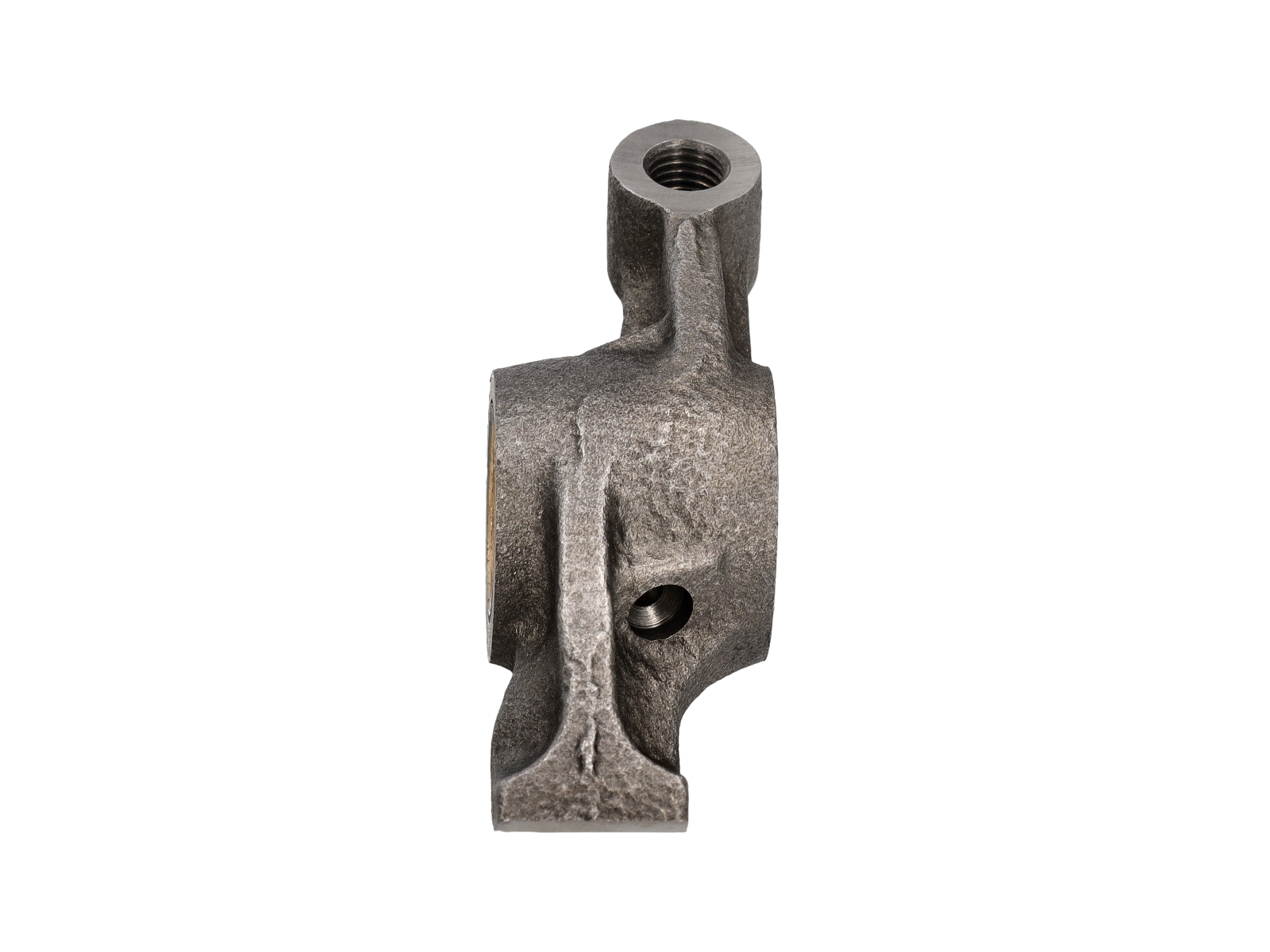
Rocker Arm - Sold Each
Not to be used with Performance Camshafts
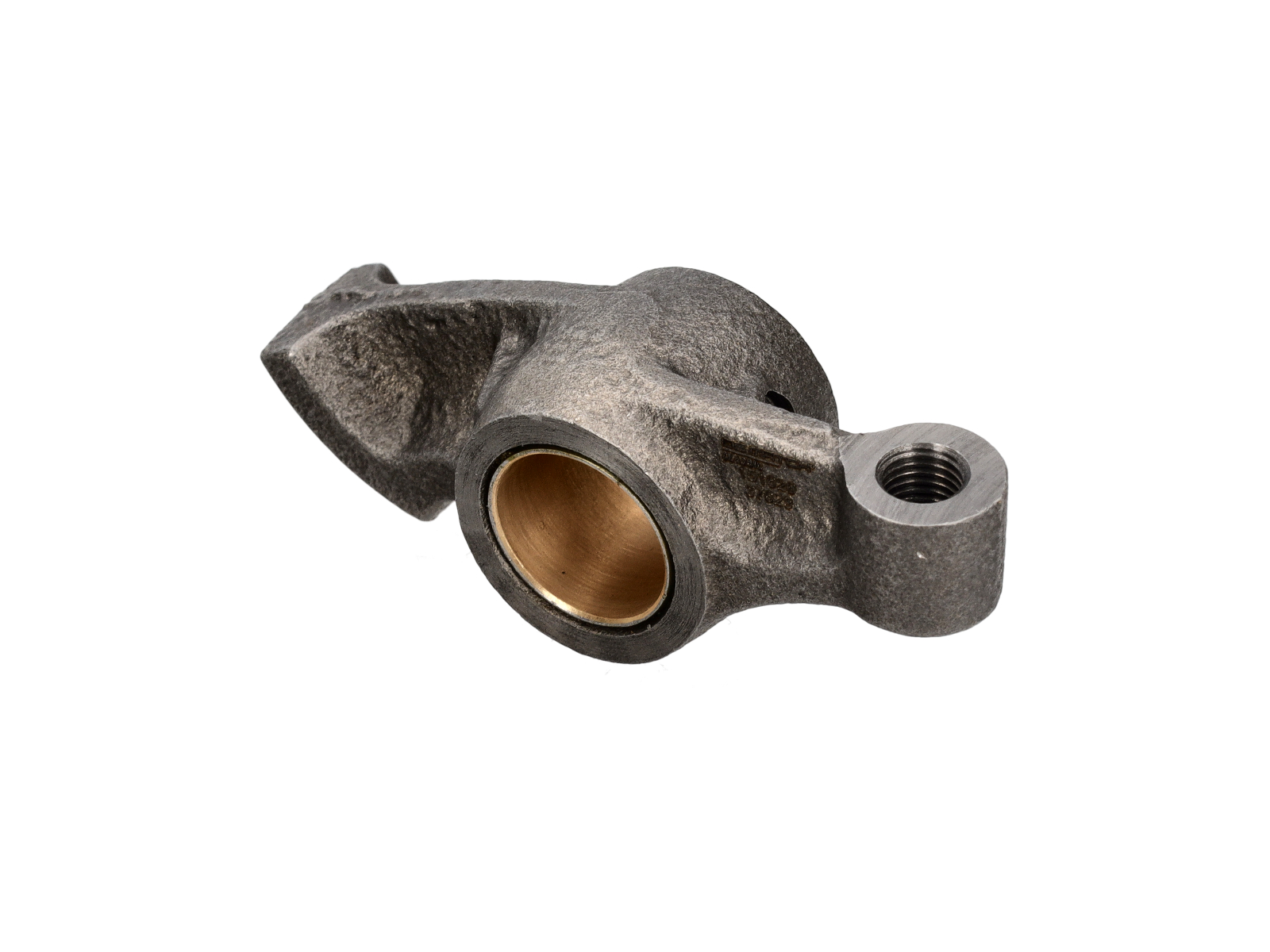
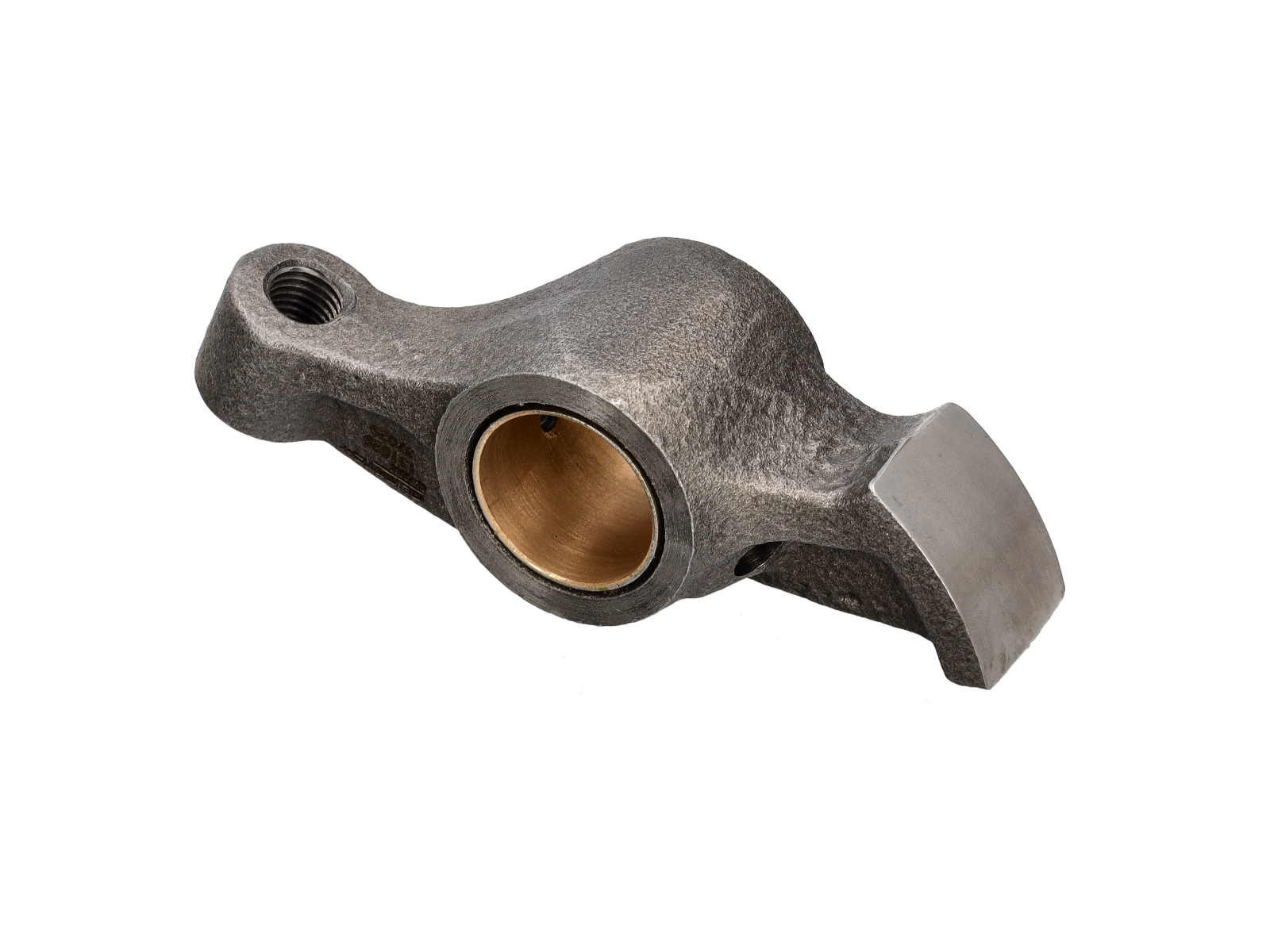
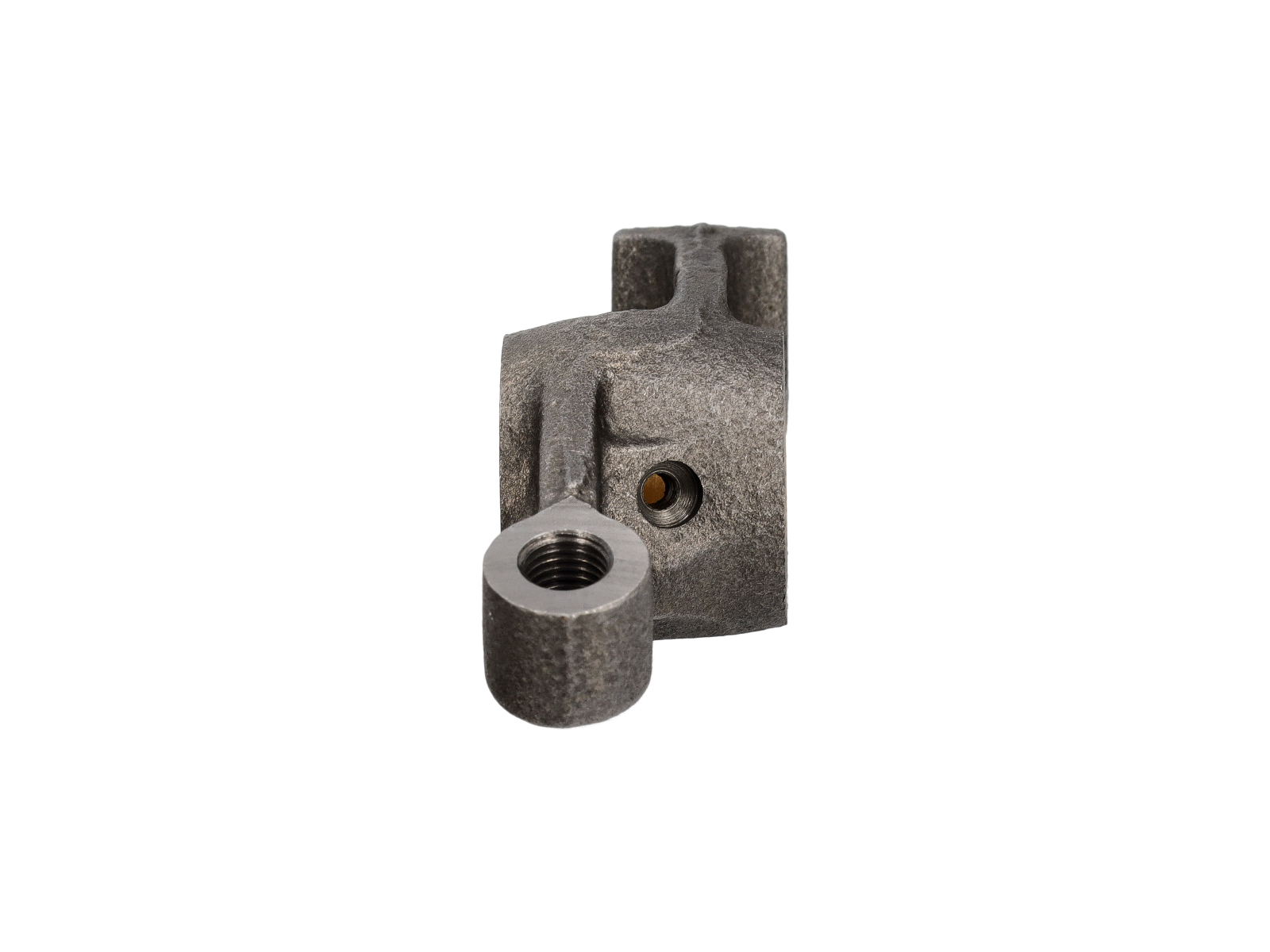
The Porsche Rocker Arm is a critical valve train component
fitted to numerous Porsche 911 and Porsche 964 models produced between 1965 and
1994. As a key link between the camshaft and the engine valves, the rocker arm
converts camshaft movement into precise valve operation, ensuring accurate
opening and closing of the intake and exhaust valves throughout the engine's
operating range.
Fits:
- Porsche 911 1965-1968 2.0L / 912 SWB (F)
- Porsche 911 1968-1973 2.2L / 2.4L / 2.7L RS LWB (F)
- Porsche 911 1974-1977 2.7L / 1976-77 3.0 Carrera
- Porsche 911 1978-1983 3.0L / SC
- Porsche 911 1984-1986 3.2L
- Porsche 911 1987-1989 3.2L G50
- Porsche 911 1975-1977 3.0L Turbo (930)
- Porsche 911 1978-1989 3.3L Turbo (930)
- Porsche 964 (911) C2 1989-93
- Porsche 964 (911) C4 1989-93
- Porsche 964 (911) RS 3.6L 1991-93
- Porsche 964 (911) RS 3.8L 1991-93
- Porsche 964 (911) TURBO 3.3L 1991-93
- Porsche 964 (911) TURBO 3.6L 1991-93
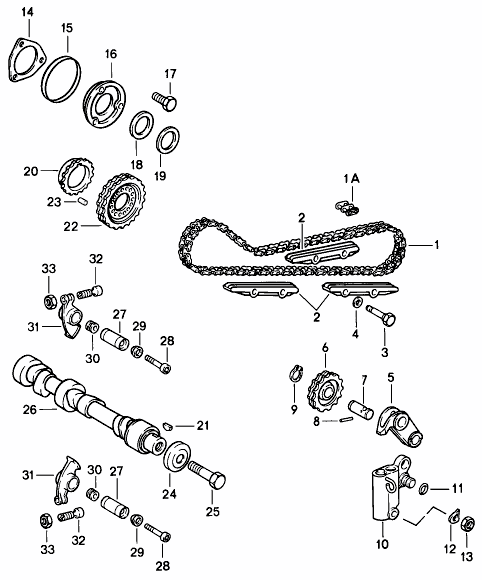
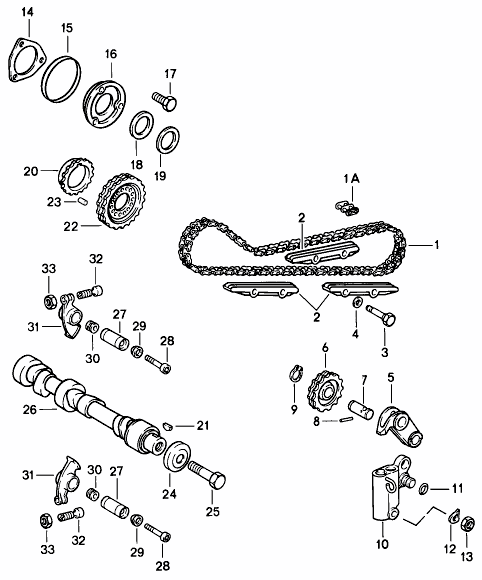
Diagram Ref No 31
Porsche's air-cooled flat-six engines rely on precise valve train geometry to deliver their renowned performance, reliability, and responsiveness. A correctly functioning rocker arm helps maintain valve timing accuracy, efficient combustion, smooth engine operation, and long-term durability.
Whether you are rebuilding a classic Porsche engine, refurbishing cylinder heads, or restoring a high-mileage 911 or 964, replacing worn rocker arms is an important step in maintaining valve train performance and engine reliability.
What Does the Rocker Arm Do?
The rocker arm transfers movement from the camshaft to the engine valves.
Its primary functions include:
- Opening intake and exhaust valves at the correct time
- Maintaining accurate valve lift
- Supporting proper valve timing
- Transferring camshaft motion efficiently
- Helping ensure optimal combustion efficiency
- Maintaining smooth engine performance throughout the rev range
Because the rocker arm operates continuously whenever the engine is running, it is one of the most heavily loaded components within the valve train.
Why Does the Rocker Arm Fail?
Over time, rocker arms are subjected to constant mechanical stress, friction, heat, and vibration. This can lead to wear and deterioration, particularly in higher-mileage engines.
Common causes of rocker arm failure include:
- Wear on the rocker arm contact surfaces
- Excessive valve train loads
- Poor lubrication
- Contaminated engine oil
- High engine mileage
- Incorrect valve adjustments
- Excessive camshaft wear
- Metal fatigue from repeated operation
As wear develops, the rocker arm may lose its ability to maintain precise valve control, affecting engine performance and increasing wear on related components.
Common Symptoms of a Worn Rocker Arm
A failing rocker arm can cause:
- Excessive valve train noise
- Ticking or tapping sounds from the cylinder heads
- Reduced engine performance
- Rough idle Increased valve clearance variation
- Premature valve train wear
- Misfires or inconsistent combustion
- Difficulty maintaining correct valve adjustments
If left unaddressed, worn rocker arms can accelerate wear to camshafts, valves, and adjustment hardware.
When Should You Replace It?
Rocker arms should be carefully inspected whenever cylinder heads or valve train components are serviced.
Replacement is recommended:
- During complete engine rebuilds
- During cylinder head refurbishment
- If excessive wear is found on contact surfaces
- When valve train noise persists after adjustment
- If rocker arm bushings show wear
- During high-mileage restorations
- When replacing worn camshafts
- As preventative maintenance during major engine work
Many Porsche engine builders replace worn rocker arms as part of a complete valve train refresh to restore factory performance and reliability.
Related reference numbers
Related, superseded, cross reference or alternative numbers for comparison.
93010504306
The product you are viewing cross references to these numbers
- Porsche 911 1965-1968 2.0L / 912 SWB (F)
- Porsche 911 1968-1973 2.2L / 2.4L / 2.7L RS LWB (F)
- Porsche 911 1974-1977 2.7L / 1976-77 3.0 Carrera
- Porsche 911 1978-1983 3.0L / SC
- Porsche 911 1984-1986 3.2L
- Porsche 911 1987-1989 3.2L G50
- Porsche 911 1975-1977 3.0L Turbo (930)
- Porsche 911 1978-1989 3.3L Turbo (930)
- Porsche 964 (911) C2 1989-93
- Porsche 964 (911) C4 1989-93
- Porsche 964 (911) RS 3.6L 1991-93
- Porsche 964 (911) RS 3.8L 1991-93
- Porsche 964 (911) TURBO 3.3L 1991-93
- Porsche 964 (911) TURBO 3.6L 1991-93
Shop Securely
12 Month Warranty
Worldwide Delivery

This camshaft timing gear is a direct-fit replacement for the factory Porsche drive gear, it ensures accurate chain engagement, quiet operation, and long-term reliability.
Fits: Left or Right, Sold each.
Fits:
Porsche 911 1965 - 1989
Porsche 964 1989 - 1994
Porsche 993 1994 - 1998
Diagram ref no 22.
This sprocket (gear) is part of the timing / camshaft drive system, engaging with the timing chain (or drive chain) to convert crankshaft rotational motion into synchronized camshaft motion. It ensures that the camshafts open and close valves at the correct moments relative to piston position, essential for proper combustion, engine efficiency, and emissions. Accurate tooth profile, hardness, and alignment are crucial—improperly manufactured or worn sprockets can lead to timing drift, noise, chain jump, or catastrophic engine damage.
Original stock / old timing gears can wear, fatigue, or lose tooth integrity over time — especially under heat cycles and chain load. A worn or mismatched sprocket may cause timing chain noise (ticking, rattle), timing drift, or—worst case—chain jump or engine damage. An new replacement restores correct tooth geometry, material hardness, and precision alignment, ensuring the timing system operates smoothly and reliably.
Related reference numbers
Related, superseded, cross reference or alternative numbers for comparison.
90110554604
The product you are viewing cross references to these numbers
- Porsche 911 1965-1968 2.0L / 912 SWB (F)
- Porsche 911 1968-1973 2.2L / 2.4L / 2.7L RS LWB (F)
- Porsche 911 1974-1977 2.7L / 1976-77 3.0 Carrera
- Porsche 911 1978-1983 3.0L / SC
- Porsche 911 1984-1986 3.2L
- Porsche 911 1987-1989 3.2L G50
- Porsche 911 1975-1977 3.0L Turbo (930)
- Porsche 911 1978-1989 3.3L Turbo (930)
- Porsche 964 (911) C2 1989-93
- Porsche 964 (911) C4 1989-93
- Porsche 964 (911) RS 3.6L 1991-93
- Porsche 964 (911) RS 3.8L 1991-93
- Porsche 964 (911) TURBO 3.3L 1991-93
- Porsche 964 (911) TURBO 3.6L 1991-93
- Porsche 993 (911) C2 1994-97
- Porsche 993 (911) C4 1994-97
- Porsche 993 (911) RS 1994-97
- Porsche 993 (911) C2S 1994-97
- Porsche 993 (911) C4S 1994-97
- Porsche 993 (911) TURBO 1994-96
- Porsche 993 (911) GT2 1994-97
- Porsche 993 (911) TURBO S 1994-97
Shop Securely
12 Month Warranty
Worldwide Delivery
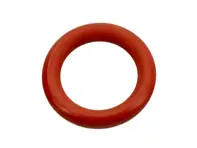


















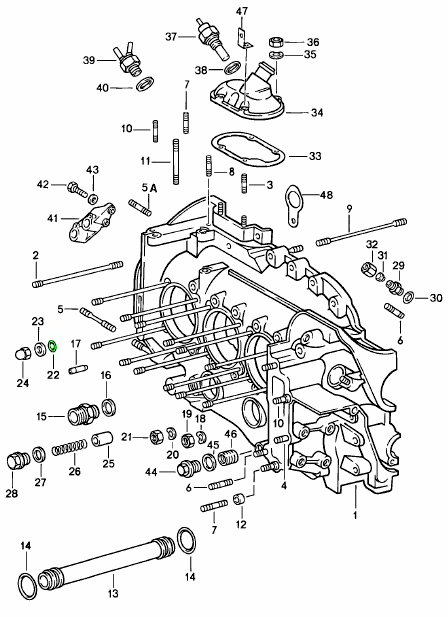
Crankcase Through Bolt O-Ring
Sold each - 24 required per engine
The Porsche Crankcase Through Bolt O-Ring is a
small but critically important sealing component used in Porsche 911 engines
from 1965 to 1989. Fitted around the crankcase through bolts that secure the
engine case halves together, this O-ring helps prevent oil leakage from one of
the most common sealing points found on classic air-cooled Porsche engines.
Fits:
- Porsche 911 1965-1968 2.0L / 912 SWB (F)
- Porsche 911 1968-1973 2.2L / 2.4L / 2.7L RS LWB (F)
- Porsche 911 1974-1977 2.7L / 1976-77 3.0 Carrera
- Porsche 911 1978-1983 3.0L / SC
- Porsche 911 1984-1986 3.2L
- Porsche 911 1987-1989 3.2L G50
- Porsche 911 1975-1977 3.0L Turbo (930)
- Porsche 911 1978-1989 3.3L Turbo (930)
Diagram ref no 22
Although inexpensive, these O-rings play a vital role in maintaining the integrity of the engine lubrication system. When properly installed, they create a reliable seal around the through bolts, preventing pressurised engine oil from escaping the crankcase and helping to keep the engine clean and leak-free.
Whether you're performing a complete engine rebuild, repairing oil leaks, or restoring a classic Porsche 911, replacing the crankcase through bolt O-rings is considered essential preventative maintenance.
What Does the Crankcase Through Bolt O-Ring Do?
The through bolt O-ring seals the openings where the crankcase through bolts pass through the engine case.
Its primary functions include:
- Preventing oil leaks from the crankcase
- Maintaining crankcase sealing integrity
- Supporting proper oil system operation
- Helping preserve engine cleanliness
- Reducing oil loss and contamination
- Protecting engine components from oil seepage
Because Porsche air-cooled engines operate with a high-capacity dry-sump lubrication system, maintaining effective sealing throughout the crankcase is crucial for long-term reliability.
Why Does the Through Bolt O-Ring Fail?
Over time, the O-ring is exposed to extreme engine heat, oil, pressure fluctuations, and age-related deterioration.
Common causes of failure include:
- Rubber hardening due to heat cycles
- Age-related shrinkage
- Loss of elasticity
- Oil exposure over decades of use
- Improper installation
- Damage during assembly
- Long-term storage and inactivity
As the O-rings age, they gradually lose their sealing ability and become one of the most common sources of oil leaks on classic Porsche 911 engines.
Common Symptoms of a Failing Through Bolt O-Ring
Signs that the O-rings may require replacement include:
- Oil leaks around the crankcase
- Oil residue underneath the engine
- Persistent oil drips despite replacing other seals
- Oil staining around through bolt locations
- Excessive oil mist accumulation on the engine case
- Leaks becoming worse as the engine reaches operating temperature
These leaks are often mistaken for rocker cover, timing chain housing, or crankshaft seal leaks due to the way oil travels across the engine casing.
When Should You Replace It?
Replacement is strongly recommended whenever the engine is disassembled.
The through bolt O-rings should always be replaced:
- During complete engine rebuilds
- During crankcase splitting procedures
- When repairing major oil leaks
- During full engine restorations
- On high-mileage engines undergoing overhaul
- Whenever the crankcase through bolts are removed
- As preventative maintenance during engine refurbishment
Because access requires significant engine disassembly, replacing these O-rings during rebuild work is considered standard Porsche engine-building practice.
Related reference numbers
Related, superseded, cross reference or alternative numbers for comparison.
99970100640
The product you are viewing cross references to these numbers
- Porsche 911 1965-1968 2.0L / 912 SWB (F)
- Porsche 911 1968-1973 2.2L / 2.4L / 2.7L RS LWB (F)
- Porsche 911 1974-1977 2.7L / 1976-77 3.0 Carrera
- Porsche 911 1978-1983 3.0L / SC
- Porsche 911 1984-1986 3.2L
- Porsche 911 1987-1989 3.2L G50
- Porsche 911 1975-1977 3.0L Turbo (930)
- Porsche 911 1978-1989 3.3L Turbo (930)
Shop Securely
12 Month Warranty
Worldwide Delivery


Monday-Friday: 8.30am - 5.30pm (GMT)
Saturday: Closed
Sunday: Closed